
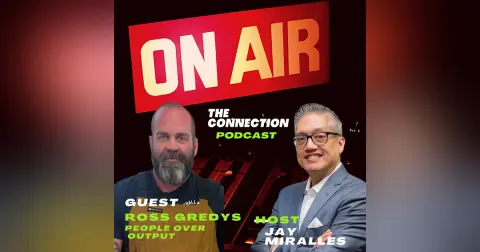
Thrive or Die: Ross Gredys CEO Rebellion Fabrication

 Apple Podcasts

 YouTube

 Spotify

 Overcast

 PocketCasts

 RSS Feed

 Amazon Music
The conversation explores the entrepreneurial journey of Ross Gredys, Owner of Rebellion Fabrication, highlighting his personal experiences, challenges, and the importance of family support in achieving success. It delves into themes of purpose, work-life balance, company culture, and the significance of genuine relationships in the workplace. In this conversation, Jay Miralles discusses the evolving landscape of the trades, emphasizing the importance of education, investment in future generations, and the diverse opportunities within the industry. He also shares insights on leadership, partnership, and the significance of faith and purpose in guiding his business decisions.
This is a masterclass in Entrepreneurship, Faith, Culture, and Grit. Take notes.
REBELLION FABRICATION
https://rebellionfabrication.com/
ROSS GREDYS
https://www.facebook.com/ross.gredys
Takeaways
- Faith and Patriotism in Life and Business
- Value of genuine workplace culture Importance of trades education
- Value of leadership and trust
- Importance of family support
WEBSITE
https://www.letsgo321.com
GET IN TOUCH
https://flow.page/jaymiralles
BUY MY BOOK
https://books.by/jaymiralles
PLEASE SUBSCRIBE
https://www.youtube.com/@jaymirallestheconnection
50 MILE MARCH FOUNDATION
https://50milemarch.org/
Chapters
- 00:00 Introduction to Ross Gredis
- 03:01 The Entrepreneurial Journey Begins
- 05:45 Finding Purpose in Work
- 08:46 The Role of Family in Entrepreneurship
- 12:07 Moments of Reflection and Gratitude
- 14:59 Building a Supportive Company Culture
- 18:10 Hiring for Genuine Connections
- 20:54 Defining Success Beyond Money
- 24:02 Empowering Employees Through Ownership
- 26:46 The Importance of Precision in Work
- 29:49 Balancing Output and Employee Well-being
- 33:03 Creating a Life Beyond Work
- 35:55 The Power of Community in the Workplace
- 39:14 Encouraging Growth and Learning
- 41:46 The Evolving Landscape of Trades
- 46:59 Leadership and Partnership Dynamics
- 53:42 Faith, Purpose, and Business Growth
- 01:01:10 The Impact of the 50-Mile March on Team Dynamics
- 01:20:24 A Message to Veterans and Purpose in Life
Jay Miralles: Every once in a while, you meet somebody with grit, determination, and vision, and it stays with you. Ross Gredis is one of those people for me. I admire his willingness to take a chance, put in the work, and keep moving towards something he can see way before it exists. Today, I want to get to know the man behind Rebellion Fabrication. What drives him? What grounds him? And what living a purposeful life means to him. And Ross, outside of your company and your work in the community, we're going to jump right into it. What's one thing you want people to know about you? Put me on the spot. I love it. It's a good question. There's only one flavor of Ross. Okay. what you see is what you get at work, at home, whatever it is. I yeah, really try not to be anything other than than who I am. I I love the deep breath before that because sometimes we can overcomplicate the answer, but Ross, I've seen you rucking with us, seen you, you know, outside other places, I've seen you at work now. And yeah, you're right. There's only one flavor with Ross. And I think people would discover that is as soon as we go through these questions. there's a lot of things that I wanna go through, different sections, but we're just gonna go question by question and this will unfold. Your entrepreneurial journey. take me back to that single stall garage and may maybe even before that, right? what was happening in your life? What were you working? What were you doing? I mean, so Rebellion unofficially started like in two thousand twelve or two thousand fourteen I will say. Okay. And that's where the single stall garage happened. We were probably, let's see, I'd been two years into being married. Yeah. my wife is entrepreneurial, not quite as entrepreneurially as me, and we were doing some stuff like that. And honestly what the garage was was like a place for me to kind of escape. Yeah. but first and foremost, what More and more people are hearing it, but Rebellion started as a car business. Really? I'm a motorhead. I love cars. Okay. so I was doing a lot of that in my garage. at the same time I was working for another large steel fabricator in Omaha. Okay. and like the the culmination was this is like when you're in any industry and you know a s And steel, they find out you have a welder, all of a sudden you can weld anything. And so as it started in the single salt garage, it continued to grow and I was pushing really, really hard to always do the car stuff, which I did for several years. But the commercial construction, ornamental iron, stainless steel, all of that stuff. The more people found out that I could do that, the more of that work. Transpired. And so there was this evolution for several years, all the way up until 2019, where whether it was in my single stall garage or I moved to a couple of different facilities, I was always running them in tandem. I had some part-time guys that were doing car stuff. I was still selling the commercial work and doing that. and the reality is is commercial construction paid way better than building custom cars. For sure, right? Because Everyone with custom cars has an idea, not the budget. That's right. Yeah. Well 100%. So you kept talking about escaping to the garage. So you're working full time as an employee for a large fabrication operation. Yep. And like you said, this was your escape, your garage. Tell me what do you mean by escape? I mean, one of the things I figured out I would say four or five years ago was like what my purpose in life was. and I don't think I I didn't know it at the time, but what I meant by escape is like my I feel like my God-given purpose is to build, create, coach, teach, drive, and inspire to the best of my abilities, all for the glory of God. Wow. Like that that's my purpose statement. Yeah. And so what the escape was was I was good at doing the things at work, but they were not things that were giving me life. Going into the garage. and using my creative mind and creating things out of nothing, you know, physically from ideas and concepts and stuff like that. I I I started doing that more and more because th th that was the thing that was filling my soul. Yeah. Right. Not necessarily the work the work that I was doing. It was it was I was what I didn't know at the time is I was tapping in to like my God given purpose. I just I didn't know it at the time that that's what it was. But there was something about it that kept on, even after a whole long day's worth of work, going to the garage to doing that. Yeah. Because I could leave the garage whether it was for thirty minutes or three hours. And that was where I would get hyper focused. Yeah. Time would just disappear. You were in your flow. I was in yes. I could tap into my flow. Yeah. Whenever I went to the garage. Yeah. And and so it just I s I did it more. And more and more. And it got to the point where, like and I think it was end of end of twenty seventeen, my wife was basically like, you you don't get to have two full-time jobs. Right. Right. So this is a point where I want to talk to people about and I want to spend more time here. I want to talk about the family dynamic, you know, with an entrepreneurial mindset and the time that it costs. Yeah. So you don't get to have two full-time jobs. And I get it, right? We we're not we're not saying that that's the challenge. The challenge is to figure out what to do with your time. What do you think your wife meant by that? So that someone aspiring at home in the same They're in that place right now. They they gotta they're working for the the the grind, but they also have this thing. Yeah. What do you think your wife was doing to you when she said or doing for you? I think at that time it was a nudge. And I I think she'd probably agree with this because again, we we we have experienced so much in the last like seven or eight years with growing the business. At at that time it was her saying like You can't you have to pick something because there's not enough time for everything. Where it's like like you're are are we gonna pick this job that is is tied to security. And I mean, the company I work for is a great company. They're still doing very well. I could have had a very successful career there. Absolutely. Where are are you going to chase this dream? But right now you kind of have one foot in each bucket and there's not enough time for the family, right? And I think And and you can probably relate to this, I don't think anyone really truly understands the time investment, the entrepreneurial lifestyle and building a business takes. When you say lifestyle, it is a lifestyle. I it 'cause it's one of those things, especially at the beginning of the journey, you're wearing all the hats. You're doing all the things. And as soon as you stop doing those things, you stop making money. Right. in the early stages of any business. Everything depends on you. And so it's it's very easy to fall into this rhythm where effectively you will burn the candle at both ends until there's no more candle to burn. I agree with that. I think that was my like the initial initial nudge where my wife was like, okay, we gotta decide what we want to do. And like thank the Lord like she is like my helpmate, my best friend. When I said, I wanna go do this thing, like there was no hesitation. Like she was key I I will tell you this right now. The success, the key to success for any man that wants to go out and make anything of himself in life. This is not entrepreneurial, is like a partner that supports what he's doing. I'm telling you to lead as a man, to lead the household and take the the the brunt of the bullets and the responsibilities requires unbridled support. I'll I'll I mean just I've said this to multiple people. The only reason that I'm in the position I'm in and have the responsibility the Lord has given me is because she has consistently been there supporting me in the background. And I don't think people realize like how how important that is psychologically. Psychologically to know whether it was a good day or a crappy day. I'm gonna go home and she's going to be there and there's going to be someone that's gonna be able to support me. Yes. in in whatever space that I but you had to earn that too. A hundred percent right because it's easy for us to conjoin in a relationship and and act barbaric or disrespectful to where the first first thing comes by, you fold, she folds and now the whole household folds, right? I mean that takes respect. Can you tell me how often and this is true, right? Like how often do you share that with her? How often do you get to as much as I possibly can. Yeah. And I'll tell you, like as far as earning it, I mean, and not to jump ahead, but like when when we'd made that decision in twenty seventeen, like we went all in. we we took out a home equity loan because I needed to buy more equipment. when I say we went all in, yeah, we sold stuff that we didn't need. we ended up selling our house when we bought this facility. Right. And we looked into another we lived in an apartment for seven years. See, see, that's the part that no one gets to see or hear. And and this is not about how bad it was for you, but I want people to know when they say, look at that. It's so it's so big now. This is yeah, lucky. Like that's that's the worst thing you can say to me, right? That's when take us to a time, right, where before the one stall garage, the the apartment, that's humility. Yeah, no, I I'm thinking that it's six I got it, six years because we sold our house. We live in an apartment from twenty eighteen to twenty twenty four. you took a step in a direction of sacrifice to say this is gonna Yeah, this well, if nothing's guaranteed. Yeah. Right. She knew right away then you knew right away. And I'll say the journey of entrepreneurship is rough because even in that, and again, she has faithfully supported me even to the point where when this we bought this business and it was going and frankly, twenty nineteen was the most wild year of my life. And and the reason I say that is because the car business was blowing up. Yes. We were contracted by McGuire's Wax to build like basically build them a car for the SEMA show in Las Vegas. Yeah. We bought this facility. Yes. The economy is great. We were getting like we were we I Matt and my partner say we literally failed up that year because we didn't know what we were doing. I went from Having a few part-time guys to having a massive facility, eleven full time employees. Yes. But there was so much work to be done. It was crazy. And I can remember we did that. We went to Sima, everything like that. And even before COVID hit, at the end of the year though, it was so wild because I was here all the time. We were building that car. I was sleeping on the shop floor. I'm all in on everything. Yeah. And I can remember we got done at CEMA. We were we went out to California for more car stuff. And paraphrasing, but my wife said something like, she's like, I love you and I'm so proud of you, but I'm trying to understand like what my position is in this marriage. Yes, yeah, because I had placed a hundred percent of my focus on all the work and everything that I was doing. But you thought you were doing the right thing by providing. Yes. And that was the that so that's what I want entrepreneurs to hear. Just because you're working hard doesn't at work doesn't mean you're working on your marriage or your relationships. It it requ I would argue that your marriage and your relationship with your wife requires more work than what you're doing. Like and not because it's hard, because it's so valuable. Yes. It it it was it was like In hindsight, and that that was a wake up for me. Yeah. Where I'm like in my attempts to provide everything for her, I was neglecting her. I get it. And I get it. Because you because you thought the the building of a business and the the income and all that stuff would okay, eventually we're gonna get there. But during the eventually, that's what is the most important time. So Ross, Was there a time where you and Amanda have ever just looked at each other? Not say that we made it, but you were thankful. When was that? Can you bring us to that moment when you were just do you remember any certain moment where it was like, babe? I mean, there's been a few, but one of them that stands out was probably like. Two years ago. We did maybe it's two or three years ago. So we had we had the opportunity of being a part of like the Gene Leahy Mall Park of and did that giant thing. And Mecca was super cool and allowed us to have like our company picnic down there and set it all up. And it was like the first time like it all the employees, their families, like their people. People were bringing their parents, stuff like that. And I just told Amanda, it was so surreal to get to celebrate with all of these people this big accomplishment. And she was like, this is in this is just crazy. Right. And it was one of those things for me too. I was struggling with this is amazing. And also anxiety. Yes. It was like all of a sudden I'm like, it's not like at the time, it's not just the 30 team members that we had. At the time. It's their families, their kids, their everything. And all of a sudden I'm like, this like this is like this is not the small garage thing. No. Anymore. And you know, and like that, I think there's been there's been multiple moments like that, where there's projects, so much of it, I think it is tied back when We slow down long enough and the entire team gets together. Again, we just had another one maybe a month and a half ago and there was over a hundred people there. That's that's crazy. And it's just like it's just it's one of those things where my wife every time she's like, Well, how does that make you feel? And I have such a hard I think the first word I said is weird. Yeah, yeah. I have such a hard time describing the emotion that I feel like 'cause I'm like, this is so surreal. Right. That this started from a garage in twenty fourteen. Well I think if you even peel back the layers, I don't want people to miss this. Your employee buy-in is one thing, okay? But when they bring in their parents, their kids, and guests, yeah, because they want people to feel part of something versus the opposite, right? Let's talk about America, corporate America. Let's talk about businesses and people getting ahead and stepping on each other. You know, there are p places where that I've worked in, they're like, There goes so-and-so again. Ugh, I don't want you to be around these people. Ugh. There's enough of that going around. So, you know, now you step back and you've had, you know, a lot of moments like that. It wasn't about money. It wasn't about the bank account. I mean, was quite I knew you were gonna answer good, but man, that that defines a lot about what you say about your family. We're talking to people in the shop just before this, you gave me the tour. The s the things that come out of your mouth are the things that come out of these employees' mouths. I I can tell you. I I know many of them. And and we'll talk about more about that later. But I think the part about the entrepreneurship j entrepreneurial journey, what I want people to know is it requires more than hard work. It requires being a good person. Yeah. I think it also requires like Almost like ignorant confidence. yes. I mean, like I've had yes, I'm like, if I knew what the last eight years were gonna be like before I started, there's no way I would have done what I there's no way. I like if you had showed me like a time lapse of everything that was going to transpire, I'm like, Nope, not doing that. When you say ignorant confidence, it almost translates this to problem, don't worry, we'll figure it out. Yeah. Shortfall, don't worry, we'll plug it up. Guys, like that's That's the blissful or that's the ignorant that's the ignorance you need. Well, and that's what I found out. we're we're really big on using multiple assessments. Like yeah, I talked to you out in the shop, like we're we have the saying, right people, right seat. Yes. And so we want to understand who our people are. So like whether it's disc or Colby or whatever it is, yeah. And I found out like my fast start is insane. Yeah. Right? Like in I have I've had so many great people around me that this idea of being like the visionary of the company. When someone told me that when we first started, I was like, what does that even mean? Right. Right. Right. But it they're like, you can see stuff before it exists. And like I think that's really the thing was it was just like, I know this could be really, really cool. And like I know that deep enough in my heart to where I don't need all the details. I'm just gonna like run, I'm gonna run towards. that feeling. Yeah. And the people that are crazy enough to come along with us on this journey, that's what we're that's what we're gonna do. As a visionary, some of the ingredients, right? We're not gonna talk about all the ingredients today, but the risk calculation, the risk tolerance, you'd rather do than be, right? You'd rather get through it than perfect. And that's why you surround yourself with all these great people. Yeah. I've met I've met a lot of them and I know a lot of them personally. Yeah. Talk about when you meet someone or when you if you're introduced to a new employee or someone interviewing for what's the first thing you look for or one of the main things you look for in someone saying, I want to work for Rebellion Fabrication. I don't I think it goes back to discernment as one of my strengths. And it's like are they are they being genuine with me? I don't like there's this gut thing where it's like I'm I'm not gonna ask everyone has these different things, but it's like you and I connect really well because I knew within like the first two minutes of talking with you, I'm like, he's a real genuine person. Thank you, man. Right. And so like I think that that's a big part of it. And I think like if you go out in the shop, there's a full spectrum of personalities out there. Yes. But if you talk to any person out in our shop. They're genuine real people. Right. And experience that. And it's like creating a space where they can satisfy that per the same reason I went into my garage, right? creating a space for that. I don't necessarily know if I always know it's the right person immediately when we hire but it's like you give the space and then the environment. And that's where we built this team too, where it's like, I will always do my best. I'm not out here all the time to introduce myself and say hi. Right. But the team that we have. Like a lot of times before I go, it's like I'm like, what do you guys think? Like what is he seeing? What is he doing? Yeah. And we've built this team where it's like it it it fosters the culture. And the reality is, is that is so strong that if someone somehow makes it through a hiring process and they're not a right fit. Right. It almost rejects them as a virus. Not yeah, yeah, in a mean way. In their own way. Yeah. It it it it exposes something that's not genuine. Yeah. and I think that that's really cool. Like what we've built is it's like we have to spend at least 40 hours our week with everyone. and that like it's just it's it's become this thing where it's like even now I what are we at sixty plus employees? Yeah, just like Yeah. Let's just make sure that we all can like Just spend 40 hours a week together with the Which is which is to me, I think when you get this large, and when I say large, I'm talking about scale of what you do, the the parts that you have to move, the companies and contracts that you deal with. Yeah. You're talking about 60 people who are they all didn't know each other. Some of them, you know, came from Omaha, some from outside. To vet that person to make it through, like you said, they'd almost self-select out. Yeah. You've created a culture, and that's what we're going to move into. Culture and leadership. I want you, we were discussing out there about what you want for these people most, right? So if if they don't hear anything else in this podcast, what do you want for your people? Legacy. Yeah. Tell me about that. I mean my spiritual background is that. Nothing that I have here I get to take with me when I die. Damn right. Right. So I I want to and I want to enjoy this life. I want to have fun, but I want to operate out of purpose. Yeah. And so creating that and the idea of the Aesop, right? It's it's bigger than myself and my partner Matt now. And we fully know that. And we want to be able to give people skin in the game. We want them to have direct control over their destiny and and where this thing goes. Because it's like I can't I can't take it with me. I can't take the money. I can't take the accolades. none of that matters. But was the adage is just like I can plant the seeds for the trees that will create the shade that I'll never get to enjoy. Yeah, bro. Right. Like that that's I truly, whether it's it's for this business or it's for my my daughter or whatever it is, it's just like that's kind of what I feel like the Lord calls us to do. It's just like yeah, not everything that we're doing right now is for us. Right. It's true. It's true. And you said, you you've you created a lot of good things for yourself. And one of the stories I want to go back to is on the plasma cutter. And we don't need to say her name unless you're comfortable with it. Yeah. Share that story of someone who wanted to be in a different career field. Yeah. A veterinarian or whatever. Tell me about that story, man. Yeah, she I she wanted to I think she was going into her senior year of high school. Yeah. we were talking about Metro and they have this welding university program for juniors and seniors. Yes. And she needed hours of credits. I don't I don't know how high school works in anymore. I don't know we won't talk about it, but it's been a minute since I've been in high school. Sure. And so she signed up for welding classes and she decided after she did that, like she'd thing she wanted to do the veterinarian thing, Yeah. And I think that's what's cool. you saw walking through the shop. Yes. I I think we calculated and maybe we need to update it, but our median age out there is 28 years old. Which is amazing to have that in the trades right now. Yeah. It's more than amazing. Yeah. But you've attracted that culture. Now, if if I'm understanding right, to paraphrase, not only did she join your team, she's one of your best. And you know, just there's a lot of good people. Yeah. But she also trained some things that she learned along the way in what you're talking about. Hey, I'm gonna let people have input to our culture. A hundred percent. we were we were working on some bigger weldaments on these beams. And like the reality was is the first few that we did, we were having quality issues. Yeah. And she came up with a different process. It worked really well. Yes. And I think that that's like that's that goes into like when we're talking about culture and everything is like we let her own that and like help. influence change, right? Yeah. And for us, whether it's hiring the right people, knowing what to do, we lean very, very hard. We operate on EOS. And so we have three core values. Yeah. And that's that's how the current organization chooses to operate and everyone in it. And if you're going to join the organization, like it's pretty simple, but it's like what makes rebellion rebellion is We believe that these are the most important thing that we do in everything we do. Yeah. Excellence, teamwork, and the thrive or die attitude. Yeah. And like what it means to us is excellence. If I asked you what excellence meant, you could probably give me a really good answer. Sure. So we had to define what does excellence mean to rebellion. Right. So excellence to us is precision directed at the right target. And the way that we define that is this, right? You like shooting? Yes. Okay. So you're set up, you're pinging a bullseye, 300 yards. Yeah. And I come up to you and I say, Jay, man, that's some great shooting. Yeah. The problem is that you're supposed to be aiming at that target. Right? Yeah. So we don't expect perfection. Right. We want people to do a really good job. But more importantly, do a really good job. at the thing that we're supposed to be doing a really good job at. Man, that's and examples in the shop is like guys will give they want to make their welds look pretty. They want they would do all that stuff and it's like, but what's the target? Right. What is what is the expectation of the project? What is the expectation of the customer? Yes. Right? let's not do less than we should, but let's not do way more than we should. Right. Because for the good of the organization, you want to point it at the this is the target, right? man. Can you hit that one more time? So it's it's ours is precision directed at the right target. And so it's God, that's so succinct. It that that was the the bullseye example was Bill Fletcher. That was his right. Yeah, I'm shooting at a bullseye, yeah. And then someone taps on my shoulder and says, That's great shooting. The problem is you're shooting at the wrong target. Yeah, I get it. Right. You're doing a great job. You're doing, you're doing a really good job. But if you don't know exactly where you're supposed to be directing that effort, it it's not really moving the ball forward. That's right. That's right, bro. There's a lot. And and I think in there's scope creep in in corporate America or you know when salespeople or front desk or management, hey, here's our core function. It's cool that you do this and it's cool that you also do this. That's not what we're asking to do. Correct. Let's focus on our primary target. Let's hit that really well and then let's add to it. The effort that we put on that half million dollar staircase is different than the effort that we put on structural steel. A hundred percent. We still want to do this really, really good. It's just a different type of work. Yes, yes. Yeah. No man, I I love that. and you were talking about Not you know, people say this in entrepreneurship or or in and it's kind of arrogant too, where people say, Well, nobody wants to work as hard as you do. Nobody, you know, do you hear that all the time? Well, they you know, it's just they complain about, hey, my people aren't doing the work as hard as I would. Yeah. Talk we talked about that. Tell me a little bit more about that. Yeah, I think it's If you're an entrepreneur and you're a business owner, you're starting something, yeah, it's you choosing to have realistic expectations for the team that's going to be working for you. Yes. Yes. Cause the reality is, is no one does and and don't get me wrong, we have some people like literally what we have eight people that have RF tattoos. Yes. Like we have people that literally bleed rebellion. For sure. But I for me to expect them to do all the things that I would do as an owner. Is unrealistic. And that was one of the things that I fought internally a lot at the beginning. Yeah. Until I had a mentor that I was like, why would they though? Yeah. under the like they don't own it. They don't, they, they don't feel the risk. They don't have all of these other things that create the weight that the owner creates. Right. Absolutely. And so one of my mentors was like, he's like the 70% rule. And you have Everyone has to frame out what that is, right? inside of the organization. I think that's what I love about EOS is like when we say right people, right seats, we have a thing called the accountability chart. Right. And the accountability chart looks a lot like a hierarchy chart. Yes. It's not. It clearly defines the individual's role on the team. Which is the most important thing. Right. Because if they know what that is, yes, and they and then we can lead, manage, and hold them accountable to that role. Right. They know what winning is and what losing is. Absolutely. They're going to be super, super effective. And so when you define those rules, define them realistically. Right. and that was one of the things where Matt and I, like I was sharing with you, like best people, best projects, best pay. Yes. And like what this whole idea defines was like we want to pay our people really, really well so they have margin outside of work. But to do that, we need the best people, right? So that's They operate by the core values. They understand what their seed are. They know what winning looks like and they're doing a really, really good job. Right. And to be able to pay people really good, we need really good projects. A hundred percent. And let's talk about the rate of diminishing return because the adage in this trades, and we're going to talk about that here soon. Hey, 70 hours, you'll get time and a half. T talk about that. Lit there's people working hard right now, Ross, listening to this saying. Yeah, man, you're right. Just because I get time and a half doesn't mean anything. Talk about how your four-day work week target fits better than a time and a half because you want people to have equity in their lives. Yes. You want them to have space to enjoy what they've earned. Talk about all that. So like, yeah, and I you know, this this industry is facing a challenge right now with available workforce, right? So I can't necessarily blame any organization that is just throwing out hours out there. At end of the day, it it it's ultimately the workers' decision if they want to do that. Yes, yeah. And yeah, we're not knocking that. We're not So what what's important to us is that our our people have margin outside of work. Yeah. I've been in this industry for 20 years. I've worked 70 hour weeks. I know what my body and more importantly, my brain feels like. Yes. After I've done that for several weeks. Yes. Yeah. It's really hard to care about what I'm doing when I keep waking up doing the same thing over and over and over and do not have an opportunity for any any anything else in my life. Right. And so we constituted like this four tens, right? So we're working Monday through Thursday. Yes. and the whole goal of that is if we need to work overtime, which we do need to work overtime. Sometimes there's Friday. But it gives our team Saturdays and Sundays to separate themselves from rebellion. Yes. Spend time with their family. Right. Recharge so they can come back. and they're ready and excited to be here again. Right. Brother, I can't I can't get to even explain to people we don't have enough hours in a podcast, but there are people out there. I don't care if it's with tie-in suit. I don't care if it's with a hard hat. Or or a welder's mask. I don't care. If you burn yourself out at work, you will have no life. Right? Like, or you could, yeah. And and you'll you'll you'll you'll medicate either on alcohol, on drugs, or something just to soothe the pain, even ibuprofen. But what you're trying to create here, and I think I want people to hear this because this is so different, Ross. I mean, even your warehouse, and and I'll make you'll see the pictures on this podcast. The warehouse here is so clean. And then one of your people, Ryan, said, actually, it's it's dirty right now because we're really busy. Yeah. Okay. For him to say that in the condition that it's in, and him show a little bit of embarrassment like it could be better, man, you can't buy that. Yeah. You can't buy that. But when you say you're disciplined, and I see the disciplined environment, see, we all talk this great game. We all talk about how we want our employees and our culture. Well, you've built it. You built, 40 hour. four day weeks and time for overtime, right people, right seats, right pay. that makes that would make me either want to work here or want to stay here. What do you think the industry, the trades as a whole, what do you think their main challenges of of of people entering? Because you know, it's people say, welding? Wow, that's a hard life. Well, it could be. But it could be pretty good too. People can retire from the trades. 100%. And they can have a life in which they don't have to be an entrepreneur. They can be smart with their money. They could be smart with their family and have vacations. Yeah. And then they can retire when they're ready. Yeah. They don't have to beat their whole body up in an environment like this, though. Yeah. Not not a regular environment. And I think I I think the economy again is influencing the why behind this. But I feel like a lot of organizations prioritize output over people. Amen, bro. I'm gonna I'm gonna rewind that and play it back. Output over people. It's so true. Right. Tell me tell me who doesn't. And and the the thing is is it it's hard right now. One, because whether there's a lot of work and you want to try to do it or you don't have enough people, like I can empathize empathize with the situation that some organizations are in, right? Yes. But What I can tell you is as we've focused on prioritizing people, we have had people show up when we've really needed help without having to ask, right? And then I think there's other ways where you can combat output. Like we we leverage the crap out of AI. Yeah. Not because I I mean that frankly, and you said it out there, not because we're trying to replace people, because what we do We we can't. Right. But we have found that that is a tool that can make our people radically more efficient. Yes. In what they do. Yes. So whether that's creating margin, creating more output, but utilizing the same amount of time. Yes. Right. And when we can do that and I can make you forty percent more efficient with the forty hours that you have, yeah. You're automatically incentivizing me to to to compensate you. Yes. for the value that you're bringing to the organization. A hundred percent. And so I like the the the challenge is is I think a lot of organizations are in this mad rush right now. And it's so hard for them to like to get above the trees and actually see what's going on. Yeah. And the reality is is it's like to make that shift of people over output, it is probably gonna be painful. You are probably gonna piss off some customers. absolutely. Right. Right. And so it's like ultimately it's a decision that leadership has to make. But I can just tell you that if your number one priority is output, you're always going to have people issues. man, that's so good. That's so good. I just I just and and you see it, and I I listen to a lot of whether it's the w the steel fabrication industry or other industries. And all these guys that are frustrated about their hiring process or losing people to a dollar an hour here, a dollar and people jumping and everything. And I'm like, Yeah, the the reality is though, is it's like if you create a culture where people want to be, yeah, and it's more than just what they make every hour, it's helping create a full life. man. Then yes then then then all of a sudden they have a radically different motivation to stay with you. And we've had Alex. Yes. We've had multiple guys where for whatever reason they went somewhere else. Yeah. And they're all back and they're all our strongest leaders. Yeah. Because sometimes you have to sometimes they like it's like the grass is greener. Yeah. And then they realize that it's just spray paint. And then right. That's so funny because people are spray painting. Right. But it's like that that's kind of what we've seen with some of our best guys. Is it was like they were doing a really good job. Yeah. They weren't quite sure. They went, but they left right. Yeah. So they came we are allowed them to come back. You open the door. Alex is one of the as a phenomenal leader out in the shop. Cody, all of these guys where it was like, Yeah, the what what's going on here is different and it's unique, right? I can tell you for sure. And the two dollars an hour that you might make somewhere else, it's like I can do real simple math with guys, and that doesn't that doesn't add up to a whole lot of money after tax. No, the things that you can't buy or purchase or incentivize are found here. let me give our listener a concrete story. Grandma's house. Yeah. Tell me about tell me so so we're talking in the in the shop and talking about feedback mechanisms. And here's one that you didn't even create. No, it was created by the shop. And one, if you ask me what grandma's house means, couldn't tell you. Honestly kind of scared to ask that. But what is grandma's house? Yeah. Literally every Thursday At the end of the day. So, if we're working just the 40 hour week, yeah, they all gather at a designated spot out in the shop. Yeah. Probably crack open some cold ones and talk about their wins, their losses. Yeah. But as a team. And like when I say that, it's like, you know, sometimes the PMs and the estimators will come out. Like it's open to anyone. Yes. Let's let's hang out as People as friends in in this thing that we're doing and and talk about how our our week went. And like we we we have like an internal communication thing, and maybe it's been around for about a year now, maybe quite not that long. But we started seeing these things like grandma's house at this station, grandma's house at that station. I'm like, That's cool. What is that? And they're like, yeah, it's like this thing we started in the shop to talk about our wins and losses for the week. And I'm like, What? Yeah, we have a book club. I don't know. What are they reading now? I couldn't tell you. So like they started with Atomic Habits. Okay, Atomic Habits James Cool. They went through what was Jocko's first book? Extreme Ownership. Extreme ownership. Yeah, bro. I said I don't know I just saw Greg walk by. He could probably tell you because he's they they have a shop one now and they have because we have our location in Elkhorn. Yeah, like the PM and sales team are doing great right now. So yeah, like it's and again, all All organically started. This wasn't like Ross being like, Hey, now you shall do this, right? It's like, no, we we want that's the thrive or die attitude. Yeah. Yeah. The whole concept behind that core value is like I will give you a lot of opportunities. Everything's a learned skill out there. You have to want to develop yourself into a better person. Let's talk about that. We were talking about the trades, or just even like if someone said, Hey, I want a chance in this career field. What you were describing to me, just bring your great attitude. you don't even need to know. Yeah. Because everything's learned skill. Tell me about that. Yeah. So I don't even know if it's on our website anymore, but one of the first videos we like it was a hiring video we made. And it like it rings true to what you're talking about. Is I was like, if you want to work in our shop literally, like three things show up on time, yes, work hard and be willing to learn. None of those require talent, bro. No, those are everything in the trades is a learned skill. Now, like if you want to be an electrician, yes, and you want to become a journeyman, okay, you're gonna have to like You're gonna have to go through four years of on the job training, yes, probably to get your journeyman's card, right? Yes. But you're gonna make money the entire time. Absolutely. Right. Yeah. Anything that's out in that shop out there, like we can teach you how to do it. Yeah. So one of the things, like I was saying, I I just spoke, Red Wing had me come in and speak about the trades. And I'm like, there's all these questions that are getting asked, and unfortunately, I think. The trades for a long time did themselves a disservice. Yes. And there there's a there's been a huge shift, don't get me wrong. Probably a little too late. And we're feeling the ramifications of that. Yes. But I feel a a lot of the younger generation feels like the barrier of entry into the trades is way higher than what it really is. And it's not. It's not. It's not. It's not. it's just look at the look at the infrastructure and money that Metro's pouring into all of their trade programs. And their programs are still it's incredible. I'm working with Boys Town. th there's this desire and it's like the reality is most places will pay for your schooling. Yes, yes. I the statistic was and I think it was I heard this from Mike Rowe, who does a dirty. Yeah, yeah, Mike Rowe. But he was meeting It was at what was it? the some infrastructural industrial summit at the beginning of the year. And Larry Fink of BlackRock was basically like just the infrastructure work that has to happen in the United States. Yes. Is like trillions of dollars over the next 10 years. Right. And he said the one thing that is going to prevent them from doing the work, electricians and welders. 400,000. yeah. just for infrastructure work. For sure. You go to the military. yeah, we've talked about that. Same thing. Yeah. Like what w the what was the statistic he gave? Like for every one submarine that the US military can put together, China builds 30 or some crazy boats or submarines or something like this. Where it's like like the the shortage in the trades where it's like everyone realizes this is a big problem. Yes. We're all gonna have to like pull our pants up and like not it's not just about making money anymore. It's like in our head, it's like if we want to do this and we want to do it for a long time, we are gonna not only have to invest in the people we already have in our facilities and growing, we're going to have to invest in the next generation. Yeah. And show them what it's like to be a fabricator or a welder. And the one of the things that even said in there is like the education around the trades. If you wanted to build buildings, it doesn't mean they have to be a welder or fabricator. Right. I can walk you through this office. Charlie and Nate do all of our CNC programming, mess with the computers, Jonathan, purchasing, computers, project management, estimating, you name it. Yes. That that trades. Yes. We're all tradesmen. It it it you don't have to be on the production floor. You're this is your B in the ecosystem. This was an ecosystem. If you're a kid that is phenomenal with computers and leveraging AI. Yes. Sean, who just sits down, he helps with all of our data input. Yeah. But he's also doing all of our AI programming for all of the tools that we're building internally. That's incredible. So there's again, the the education around what you can do in this industry. Yeah, you don't have to just weld. You don't have to just be an electrician. you can do A lot of things and be in the trades. I think the movie the movies have may create a misconception and and the the newspapers and the media and you know when when people say, Well, I make TikTok videos and I make a million dollars, like listen, that's not for everybody. I want to work hard, yeah, I want to provide for my family, I want to learn something. I want people to understand what the trades are. And you broke it down really well, but the trades aren't just a hammer and an anvil anymore. No. Right? It's so much more. It's a whole ecosystem. It's a support deote. If you're good at financial, if you're good at sales and strategy. Absolutely. They're not they're not physically building anything. Right. But without them, this organization couldn't function. Understood. Understood. It takes everyone to build. Like that's how you have to look at this. Is this like No one part of this organization can live on its own. Absolutely. They're what they do out there is super critical. But if we couldn't sell work, they wouldn't have anything to do. No. I and listen, I think from from the fabrication floor to a boardroom meeting with a presentation, it's all there, right? And you've got to trust this team, which leads me to one of the the final questions about culture and leadership. Then we'll move into God, country, and purpose. But I love Matt Cade. Great guy. Watched him for years, man. just and you described earlier we couldn't be the yin and the yin, which is amazing. Yeah. Which too many people want to be like each other. But here's a question. Yeah. What has partnership with Matt taught you about trusting and letting go? Right? These are all good questions, Ross. We could do a podcast around this. Honestly, that would be a really fun one to do with Matt because his his his I think our answers would be similar but different. Right. Like he and I have been through the trend like Matt and I are brothers. Yes. We don't look anything alike. No. But but like legitimately, right? Like, I mean, trust like from the very beginning. When when we bought this together, Matt was Matt was gonna be, I don't wanna say silent, but not involved full time in the organization. Understood. He was gonna be minority equity owner, yeah or whatever. We got into this thing and we both realized that it like I don't want to say we were sold a bag of tricks, but it's like you just you don't know until you really get in, you start operating. I get it. And it was in the first couple of months he quit his job. Yeah. He came and worked here for faith as well, because he was doing great right where he was at. we so like that right there was wow. that that's that's a big decision. Yeah, and it's not like it was Matt Cade single. it was at that time married kids. Yeah, I think at that time he Had two or three kids at the time. Yeah. Got five now. and but again, like that was a big decision going through COVID. Like, man, we dude. If it wasn't for Matt and like his his business acumen. Yes. Like everything with the PPP grants and everything like that. Outside of that, him just literally going months without taking a paycheck. Yeah. Putting his own money into the business. Understood. There was there was this foundation of trust at the very beginning of this journey where it was like like we're all in. You can so Matt and I are big on every Friday, we have the same page. whether we're talking about fun stuff or really serious stuff, us staying connected is is critical. our wives joke, it's like the business marriage. But the reality is it is it has to be because We have gone through seasons where we had let that slip or difficult things or whatever it is. And when you choose not to when you choose not to press into like the hard conversations, stuff can get really rowdy. And I think that's the one thing that I've always appreciated about Matt, because I'm wired in similar ways, is like like like we encourage healthy conflict. See, I think people can learn from that. It's when Countries go silent, it's when oppositions go silent, it's when no one comes to the center line and says, let's joust a little bit. Yeah. That's when people go to war. Yeah. But if you are able to engage in healthy conflict, big debate, disagreements, with with not to not hurt each other's feelings. You're gonna get your feelings hurt, he's gonna get his feelings hurt. And that's okay. I mean, there's we've had, I mean, outside of like hitting each other, we've had some like knockout, drag down fights. Yes. Because we knew we needed to. We lock ourselves in a room and it's like we're not coming out until we've we've cleared the air on this thing. And maybe it's not the most professional thing in the world, but I think there's a lot of people in this organization that have seen that. Yeah. I get it. From my perspective, I think it demonstrates the commitment that we have to the organization. Absolutely. It's just we're not gonna sit here and pretend everything's okay. Right. Because it's not. Right. You're not doing it for perfection, you're doing it for progress. A hundred percent. I think, too often people are gonna see you at your realist. And if they always see you at your perfect throne, I don't think people buy into that. So I mean No, and to the trust part, it the through that stuff, like there was always this analogy that like in EOS of like the puzzle pieces, you know. So like I'm the visionary, Matt's the integrator, and what that means is I'm a fast starter. I love seeing stuff. I have lots of ideas. Yes. It's jobs focused, integrator, president, whatever you want to call it, to make sure that that's getting filtered down through the organization. There was a lot of stuff from a trust standpoint, and it took me a long time. Yeah. When you start a business, you do everything. Yeah. I had to get to a point where I had to be okay with letting go of things and more importantly, realize that not. Everything is going to be done the way that I would do it. It doesn't mean that it's wrong. No, and that's key. Not everything that needs to be done is going to be the way that I want it. Yeah. And you're right. It doesn't make it wrong. It just makes it your way. And so, focusing as a leader, Matt and I have really tried over the last few years to focus on trying to communicate expectations of outcomes. Okay. Right? Like not who, not how. who not like who's doing it and what like when Jay, you're the guy for this job. When this is done, I I need this done in three weeks and this is what my expectations are. Clear. Clear. And so when you build a team around that can operate in that environment, that's the team that you want. You want people that can make decisions. You want people that are humble and teachable and and but also it's okay, I'm I'm gonna choose not to get in your shit. Right. But this is what I need from you if I'm gonna give you this responsibility. It's one thing to assign a task. It's another thing to say, here's the owner, three weeks from now, here's the outcome, and here's the system that we're gonna use to follow it up. And you already know it's culture, yeah. Right? It's in your system. I'm sure when you first started EOS it wasn't easy. No, But now it's that's your language, that's your operating system. And and I think Too many corporations, too many small businesses, too many large businesses. Always have this. Let's meet. We're to get together for a meeting. And it's an informational meeting. Yeah. we can we can go for weeks, but I want to transition. you know, Matt and you are great partners, and I can see it, the yin and the yang. And now I want to get into God, country, and purpose. You know, here's what I know of you, But I want people to hear it from you. What role If any, What role does faith play in your life and the way you lead? I mean I'll be honest with some of the the trials that we've had, it's become a bigger and bigger and bigger part of my role as a leader of this organization. Yeah. Like, you know, I'm pretty thick skulled individual. Yeah. Fair like a learning. And I've I've I've I've driven myself really hard to try to accomplish things in my own strength. Some to the point, yes, my wife, I've been in the hospital for just pushing myself, trying to being able to find the balance. And we had last year coming out of co COVID was really tough for us. Yeah. There were a lot of silver linings that helped us grow the organization, right? 22, 23, 24 were phenomenal years. We grew 40% on average year over year. That's unheard of. It's crazy growth. Right. Yes. right. And it was really big for us because in the the proverbial, you know, small business, chasing that $10 million mark, right? Every everything gets easier on the other side of that, right? we were pushing for that. And in twenty four, we were doing really well. We maxed out our capacity. Yes. and so Matt and I sat down, we put this plan together and we're like, okay, we we need to make this more efficient. We need to do all these things. And we did this massive capital expansion investment into our our facility. This massive CapEx thing. Yes. And we thought it was gonna be all sunshine and rainbows. We were gonna be more efficient, be able to do all this stuff. We went into twenty five and it was like we came out of the starting box and fell flat on our face. Yeah. This multi million dollar piece of equipment we bought didn't work right for months. Right. Months. Right. And we were hemorrhaging money, having to send all this work to other fabricators and know we made a bad hire on the finance side and there was all the stuff it yes we got to November of last year it it it all came crumbling down and equated to lots of commas and zeros of losses last year. Understood. It was it was very painful for Matt and I right and I I just remember Matt and I we sat at my kitchen table a lot whether it was arguing Tears figuring out how we were going to communicate, what we were going to communicate. But it was one of those things where man, we've worked so hard and everything feels like it's falling apart. And I was listening to a podcast. This is me in the shower of all places. Yeah, yeah, yeah. That's the best place to listen. Two entrepreneurs talking, and this guy asked the question. everybody has their different ways of saying, like you hear the Lord talking to you. But the guy asked the question on this podcast, but it was almost like the Lord was speaking right to me. And paraphrasing it was Ross, if you knew rebellion would end in pennies and not in millions, would you still be obedient and follow me? And the really hard thing for me, in that moment, was I want to say yes, but I can't answer that and mean it right now. Because I there was still a part of me, even though I said that. I was just a steward and that this was his business. There the motivations, there were still motivations where it's like all of these things are really good, but I want to still want to make sure that I win in the end. And like I really, I really truly feel like that was the point where like the Lord was like, Listen, if we're going if like if if this is going to be what I have for this business, like I need to know like where your heart is at. in this organization. I was like, I can't, I can't keep I can't keep running Ross the business owner and Ross the Christian on these two individual tracks and try to be driving them and have them cross over like when it is convenient. It's you know what I mean? It's like I'm just I'm not gonna do that anymore. Right. And so there was there was all this stuff where the and I've told you I'm going through this program after church called Regeneration where it's like I for the longest time, and it started eating at me. I struggled with I've struggled with anger for a long time. And a lot of people may not have known that, but man, it is always right under the surface. Under and one of the most exhausting things. Well, even as a business owner. And one of the things I told my partner Matt, because we have an internal communication thing and we all have these little icons. And for the longest time, my icon was an AI generated version of me yelling and screaming. man. And I can just remember, I'm like, is that is that what people are going to like? Is that what I want people to remember? Right. Right. That would stuck my heart. It's funny, but it's like, really? I'm like, is that if that's the way that I'm remembered, that's that's not what I want. And so there's a lot of stuff that's happened in the last year, and the Lord is really honestly, Jay, the the year from last year to this year, you can ask anyone organization, the way that the Lord has blessed this business makes no sense. and the people that have shown up to it makes no sense. The the pe yeah, I just yeah. It it makes no sense other than the the Lord has put his hand on it and said like this, we're going to do crazy stuff with this business. And I'm I've chosen to participate. I think the biggest thing is. Now I've chosen to participate in what his plans are for the organization. It doesn't mean that I'm not a green light guy. Yeah. I think that that's the Lord calls us to be green light men until he gives us a red light. Yes. I still need to plan. I need to steward it well. I need to set milestones over rocks and everything like that. Yes. Yes. And as long as they're in alignment, keep doing that until he says, No, don't do that anymore. But I think that that's not saying that God broke your machine, right? Right. You know. That million dollar or mil multi million dollar piece of equipment and what you have to go through probably set you up for this season. 100%. Yeah. I can tell you right now, what we have on our plates right now, if not just me, the things that our team had to figure out how to do last year. Yeah. If they didn't go through that, there's no way we would have been able to execute on what we have this year. That's cool. And and you could ask anyone. Without a shadow of a doubt. Cause even when I told them what was on our plate at the beginning of the year, everyone was like, What? Right. Like, you know, and then again, it's like we had these things called Tiger teams. I sat we sat down with our team every single week for like eight weeks and we're like, this is how we're gonna do it. This is what it looked like the starter side, right? Yes. This is what it looks like, this is how we're gonna do it. And and coordinating all of these things, but you know, plugging Jonathan and Sean and Ryan and everyone, and it's like I'm like, it was the it was the one of the coolest experiences I've had. Yeah. leading this organization because all of a sudden it was like all the right people were there. And they had and they knew and even if they didn't know, I knew. Yeah. I've seen these people do amazing things. And Ryan and I were talking out there. This mentality of we just because it looks hard or it's scary or we've never done it before, they're like we don't say I we can't. Right. But we're gonna figure it out. We're right Options instead of I can't, or I'm gonna try. Right, I'm gonna figure out a way. Yeah, I think I have a solution, I think I have an idea, right? But we're not gonna sit in this meeting and say we can't do something, right? Or that's impossible. I think too many organizations say it's never been done before, yeah. Or or that's not safe, or that's gonna cause a bunch of work, or there's a bunch of investment, and I think that stops a lot of people because. They're not used to a little bit more effort, a little bit more time. They want to push a button, and they want the earnings to grow. And I and I don't think that's just business. I think that's with everybody. Yeah. what responsibilities come with the freedoms and opportunities that you've had, man? What are some of the responsibilities? You've grown up over this time. I'd say in an accelerated incubator, found your faith, let go of your or manage your anger like you've just been vulnerable in saying right now. Wrong people to the right people. What are some of the responsibilities that you say? And you want your employees to hear this, you want your friends to hear this, you want your family to hear this, you want you want someone who doesn't know you to hear this. What responsibility do you feel first to this company? Man, I don't even know how to put it into words. Let it go, man. Let it out. It's been the craziest adventure. And I've definitely had to grow into the the the accelerated incubator. It's probably the best. It's just like the Lord has always taken me on these adventures of like just the most insane, like steep learning curves. Yes. Right. And I think he just knows that's how I'm wired. I'm I'm not gonna sit there and read the directions. it's just so he and he knows that, right? And he's just thrown me into that. There's been there's been a lot of questioning this year. Yeah. we've been growing so fast, And this pro this journey through regen has just been so amazing because there was a parts of me that always like, Am I the guy now? Yeah. can I can I do this? And the the Lord is No, I I put you here for a reason. Yeah. Right. And so Taking that that responsibility very seriously and what does that look like now? I told you, there's I'm I feel like the Lord has been taking me through like this this journey and I'm He's almost forcing change. Yeah. Right. the question he asked me last year and going there's there's preparation for what's going to come next. And I'm taking it very seriously. whether it's I'm I'm part of a a C twelve organization, which is a Christian men's business peer. putting myself around other leaders. I don't know if I fully comprehend the weight of the role. And especially with the vision that we've laid out and where we want to go over the next five years. it's a big thing. Yeah. And so it's if if I I want them to know that I I take this very seriously. I want to have fun. Yeah. I want it to be people first, but it it can be a very it can be a very heavy thing sometimes right yes and but I take it seriously and as long as the Lord has me here I'm I'm gonna continue doing that. I think that's your that's your guiding light brother because too often you know we think of boardroom CEOs, we think of the title CEO and we think suit, attache case, Lamborghini, whatever, right? Those are all things, but I think what has been bestowed upon you, and we talked about this, with with much is given, much is trusted, right? You could just eat that pie up, but you were telling me about how you care for these people. And then, I had individual conversations, asked people, you know, questions. You can't make up the stuff that you're saying because it's coming out of their mouth. And more specifically, you know, I feel when you walk into a place and you're treated by not even the person that you're coming to meet. You can just feel the the the energy. You can feel the culture. And it's not I see you walk through your warehouse or your not warehouse. What's this called the shop. The shop. The shop. It's it's amazing building. People don't fear you, man. They they are respectful. Who turned down their music? I was like, no man, turn it back up, you know? The culture of what you built, Ross, I get to coach and help other companies get better. And I'm learning now too that there's some things that that time just has to take care of through trial and error from your conversations. But more so that having a moral compass, having your faith, I'm not gonna say that makes you better or worse than anybody else, but it makes you different. You know what I mean? You're your own flavor. And because you've anchored into that. And you've non-compromised that and maybe some people believe less or more than you do, but you've created an environment. You and Matt, I I don't want to discredit Matt and whoever else is here, you chose your team. But you some of your team has chose other portions of the team for you. Yeah. Because you trust them. 100%. That doesn't come from, let me make sure I have the final say so on that position right there. Cause that's a little yeah, that's crazy because if you did that, you'd not have a life. Yeah. You would not be able to get to 64 people and where you're at now, man. I think that's crazy. So there's a lot of people that say a lot of people that hear Ross, when we first started rucking in the morning at 5 a.m., I didn't know who you were. You didn't talk about your company. You didn't talk about this is who I am. We were just rucking for a cause, you know. And we'll get there. before we transition to that, you're patriotic. Yes. You're of God and country, you know, and and What does that mean to you? You are of God and country. Does that is that how you run this business? You are of God and country. Yeah. a lot of our merch all has the American flag on it. I literally have liberty or death tattooed on my arm. Yes. And I think, I'm I haven't served in the military. We have a lot of guys do, but Being here has allowed me to do the things that I've done. Yeah. And I'm extremely thankful for that. Yeah, for sure, man. I mean, the the story, how this came to be, the people that we have involved, everything like that. I think it'd be a very, very difficult thing to do anywhere else than here. man. I you got something special here, brother. Just the the Top Gun Award, right? Is that right? Is that what it's called? some of the videos, some of the the flag is here. Yeah. I love that for you, man, because you've created something that says, Yeah. I I see people of all different backgrounds here, right? Different different education levels, different just everything. Yeah. And and they just have to believe in your values. They're have to align with your values, right? But they can bring their ideas too. A hundred percent. God. Who who would when someone feels listened to, that's all kids want, right? Kids just want to be heard. Yeah. When they tell you an idea, they just want you to know that you heard. Yeah. It's not always the best things. They just want you to hear them. Right. Hey, hey, thanks, Max. All right. Max goes away. But when you say Max, nah, it's dumb. Yeah. you don't even give Max a room to breathe. Correct. I think that's what happens here. You give people room to be seen. And and I love that for the person who was on the CNC or on the plasma today. I just love that story. But okay, brother, Fifty mile march. Yeah. How did you first hear about it? And this was this will be our final ten minutes. Yeah. How how'd you hear about it? Greg. Okay. What was that conversation like that day? I mean, we hired Greg last year. I can remember. So he was, you know, what, a month and a half out from doing it. And he was telling me. And I'll be honest, like he told me what it was. And when I first heard it, I was like, man, that's crazy. But I've always been in this mindset too. We were talking about it with Ryan, right? It's like similar. I I have zero desire to go run an ultra marathon. No way. I've always the the mindset of like last year I was doing this thing where it's like I was forcing myself to wake up and do something that I hated more than anything. Yes. Because if I could force myself to do something hard, the the rest of the day would probably suck less. And we were having a crappy year. Yeah. And so I'd get up every morning and I would do 30 Burpee push-ups. the first thing, don't about besides going to the bathroom, that's crazy. I'd go into my family room and I'd do that. And when Greg told me about it, I was like, Yeah, that seems harder than doing burpee push-ups. it and I'm I'm if that gives you any insight to how my mind works, I was like, Yeah, that seems harder. I'm probably gonna do that. Right. Right? And in and I didn't That would that was that was literally the logic behind signing up at a time. I really didn't know a whole lot about the organization or whatever it was. At that time I was just in a mental space where I'm like, things are really tough. I need to go find something harder to do. Yeah. So that that that's how I heard about it. That's that's incredible. And so You you trained, we were walking in the morning. Sometimes it was cold and it was no, it was hot. It was mostly hot. Yeah. Because it was during summertime, right? But what it what did that do for you? What what did connecting with strangers you've never encountered? Well, first of all, I think it made some good connections and some of those people are working here. They are. They that's that's cool stuff. Yeah, I mean, so honestly, like when I started, I think I committed to doing it, whatever it was last fall. Yeah. And then it was around the beginning of the year. Greg was like, Well, have you started training yet? Are you doing anything? And and in my head, there were no excuses. There was a lot of stuff going on. Yes, there was. Yes. But then they're like, he's like, Okay, well, so so we went to the big kickoff thing at the beginning of the year. Yes. And then we had the qualifier, right? Yeah. And I was like, okay, yeah, I should probably start doing something. And I'll I'll tell you, and I'm I know I'm not the only one that has said this. I radically underestimated the amount of training that any can do for that. Fair, fair. because that twenty miles kicked my ass. Yeah. with a lot of us. bro. It comes mine every year too. We were we were walking real funny for a couple of days. That's true. And so like after that, that was I I'll be and I told Greg this, I'll be completely honest. I like, man, I don't know if I I'm gonna do this. Right, right. Because there comes a win. And I understand why there's a If twenty miles was hard, can I do fifty miles? Right. Interest versus commitment, bro. And what I didn't know at the time, the the physical side was a part of it. And I I've told everyone this because then it was like, you know, I started doing the five AM Rucks with you guys. It was 'cause I like working out. But I'm like, okay, if I'm gonna do this, I I clearly need to prepare physically more yes than where I was at. You know, I let my just last year again was tough and I wasn't working out. I wasn't doing all that. Right. So he invited me to the five AM thing and we were doing stuff in the afternoons and all that. And it was like that was when I started to learn not only what the organization was, but who was in the organization. Yeah. Right. Yeah. and two, your point with we have eight people with tattoos, you have a bunch of people with a 50 mile march tattoos. Yeah. I think I told Greg this. I had always been very apprehensive about charitable giving to organizations because I've seen enough organizations not use it well. I've been burned on that stuff. And I said the difference with the 50-mile march is everyone that leads the organization is participating in the march. Yeah. And And it's not not just participating in the thing. It's 50 miles through the middle of the night on what sometimes seemed like a never ending treadmill. Bro. That's that stint between Ashland and Gretna. All uphill. All uphill. And this is what I'll say. It it was definitely a physical challenge. there was never any part like after I trained for it from the physicality side where I was like, I don't think I can go anymore. The mental game. Like I it was 70% mental, 30% physical for me, especially that stint. It's all uphill. It's in the middle of the dark. There's something about everyone's red headlamps where I feel like you go to the twilight zone. Yes, for sure. And going go between Nebraska Crossing and Gretna. Yeah. I felt like we were walking, it felt like days. Yeah. it knew all everything looks the same because you can't really see anything. And that stint and getting getting to the high V, I can remember because my beautiful wife again showed up at whatever time we got there, four o'clock in the morning. Yeah, yeah. And I was like, I needed that so bad. Yeah. Because there were that if there was any part where I was like this end battle where I'm like, I'm so close to the finish line, but that sucked so bad. Yeah, I don't know if I want to get back up out of my chair. Yeah. But then then the timing of that is so beautiful because then the sun Everything starts to get lighter. And I can remember we were we walked down out of the high V and up, and it was cresting the first hill, and the sun was just cracking. And you could see the lights at the baseball stadium. And I'm like, I got this. Yeah. Until we got to FedEx. We went around the long way. Whoever planned that route is like a sadist or does. And we all knew it was coming. Yes. But there was still something when we walked past the entrance for the first time. You could see all the I was there's a picture and Greg sent it to me where Greg's just like smiling and I'm next to him and I'm like And I was furious about that. But it was I I can tell you one thing. One, the relationships, not just with the guys here. Yeah. There's something about doing hard stuff where it's After about two or three hours, there's nothing else to have small talk about. No. So the the conversations that I had with people that I had never met before. Yes. The relationships that we took out of that. Yeah. All of those things. I'm like, it was it was somehow the most grueling but the most real thing that I had done in a long time. Thank you for saying that. You know what I mean? Yeah. it's you there's no way. Of replicating that because you've all chosen to do this hard thing together. Yeah. So it forces you because everyone has their moments along that thing, right? Where someone's shoe is screwed up or whatever it is. It's like just keep going. Yeah. Just keep going. That's right. Just keep going. Just keep going. That's life. And it was, it was, it was such a cool experience where it's I can remember going into it and be like, you know, this might be a cool one and done thing. Right, right. And now it's not necessarily about the hard things. It's just there's just not enough stuff in life where you get to experience the the such a real connection with people. Yeah. this life, social media and all these things, everything is so surface, right? Yeah, bro. And when you do something like that, you cut through the surface level stuff real fast. I mean, because it requires a certain kind of person to do that. Yeah. Right. That's the thing. it's just so regardless of your walk, even the five AM Ruck Club. Yeah. Regardless of what you do, it's like everyone's showing up at five AM to go walk five miles. And some people are driving from afar, time to get ready, time to get back home. First of all, you're fighting the first part of the you don't want to do it. And if you win that part of the day, bro, that I mean, that that's the best. you're walking alongside with your team. Yes. You know. And and you guys broke up every now and then just to move around. But you had five of your team members, right? With you. Yeah. So what what what helped you understand more about them? Again, I think it was the hard thing, right? and I knew they were all solid guys, but they came from all different areas. whether it was the PM side, the shop side, whatever it was, like getting to know them better. their families, their walk of life, how they were raised. it it created so much more dimension to them. Yeah. From a relationship standpoint. And even just even now, there's something unique about having done that with those people where it's the the relationship that I can have with them now. Yes. Is is at a is at a very deep level. Yes. For sure. You've been through you forged steel together, right? Like You've been under pressure with each other. You've seen the ugly and you've seen their families though. You've seen them connect. You've heard their wives. Well, an example like Alex, right? We were out there talking with him, right? Yeah. I knew that he's really talented and good at what he did. He was having, I can't remember, he twisted his ankle like on that that stint between Ashland and Gretchen. Yes. That dude taped taped it, taped it up. no, bro. And just powered through. And so even my perspective, even back now at work in in this setting, it's like there's nothing that I know that I can't give out. He's gonna figure it out. That's 'cause he doesn't like there's no there he doesn't have the quit thing. Right, right. Right. Right. And that's what we want, this thrive or die attitude in the organization is it was it was it was a different way of watching him stress test himself. But that transcends the 50 mile march or what we're doing out here. It's like, okay, I I know what that guy's made of now. Yeah. Yeah. And that and that I think that that's really cool. I I want to wrap this up, but what's important to me, you know, at the end of the day, Ross, is I feel your passion for what you do. I feel, you know, like, yes, there's this tough part of you, but I want you to talk to the veteran now that you walked for. Yeah. Maybe he or she is in their car right now. Maybe they're they've been passed by in life, right? Maybe they're in a bad spot. What do you want them to know? And what do you want them to know about why you participated in the 50-mile march and what you feel about them? I would want them to know that I see them and I appreciate one of everything that they've done for their country because I know they probably feel it's easy, man, especially in the society. I think so many people take for granted what we have. Yeah. And regardless of where you stand politically and what you think of, the reality is is if you joined the armed services, you felt you were going to choose to commit a portion or all of your life. Yes. To protecting one of the greatest countries in the world. Absolutely. Right. And I I think that's amazing. And for the people that, especially for what you guys are doing and who you're trying to reach to, if there's one thing that I want them to hear is understand, regardless of your circumstances or how you feel, you need to know that there's there's a Lord that loves you. Yeah. And He has a greater purpose for you. Yeah. and like There's nothing that he can't forgive you for. And if those are the things that you're holding on to, there's an opportunity to release those things because his purpose for you is not done yet. there you're a significant being. You have great purpose. And I think there's a lot of people, especially in the armed services, they connected, they felt those really hard things somewhere. Yes. And they're and they're looking for. that. Yeah. And I think that's what's cool about the fifty mile march, right? Is to experience the hard things to march for those people and do that stuff. Yes. But it's just because you're not in that space anymore doesn't mean that you're insignificant. Yeah, man. Right. going back to the trades. Yes. Like the the the skills, the abilities, the drive not to quit when they were serving, all of that transitions into what we do. I love it. All of it transitions into what we do. There's space. Brother, that's When you were talking, man, kinda took me out of my seat for a second. I I appreciate what you say, man, because Ross, I I know you're the real deal, man. And I didn't know that this would be a therapy session for me too. Usually, you know, usually these are good podcasts, and we just have this was a great podcast, but I learned a lot. I usually have a closer, but I'm not I don't need to do that, man. There's so much in this lesson of a podcast that if you just took the time to rewind it, AI through it and get the best highlights and just play some of them back. Some of the quotes, some of the things that come out of your mouth. yes, I get there's books and all that, but we don't have all the time. Ross, you gave us a lesson in in what it's like to live the values, to be a purposeful human being and serve others, brother. Thank you. I appreciate that, man. You have you have no idea and I'm just so grateful. I want to follow you, man, and just see how everything progresses. And God has bestowed upon you a great Burden and responsibility to take care of all these people. And I know when I asked you that earlier, what's the responsibility? I'd had you for a second, but it's because you have so much that you want for them. And I felt that. I think that's the gap. You have so much that you want for them that that's what your mission is, right? Yeah, brother. So good, Ross. Thank you for being on today, man. Absolutely. Appreciate you, man.