
Interest Rates or Committed Lender: THE FACTS

 Apple Podcasts

 YouTube

 Spotify

 Overcast

 PocketCasts

 RSS Feed

 Amazon Music
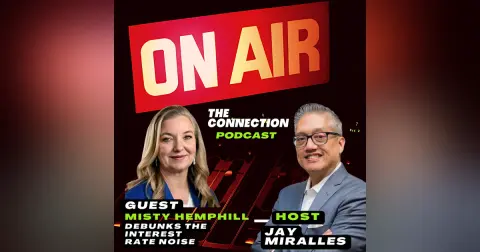
In this conversation, Misty Hempill shares her personal journey from a childhood of renting to becoming a successful mortgage professional. The discussion highlights the importance of mentorship, community service, and the barriers many face in achieving home ownership. The conversation explores the complexities of homeownership, emphasizing the importance of financial preparedness and understanding market dynamics. It highlights the role of lenders in guiding potential homeowners through the buying process and the significance of homeownership as a path to generational wealth.
Takeaways
- Importance of mentorship
- Impact of community service Homeownership as generational wealth
- Importance of financial preparedness
Chapters
- 00:00 Misty's Journey into Mortgages
- 09:33 The Importance of Home Ownership
- 10:54 Overcoming Barriers to Home Ownership
- 15:32 The Role of Mentorship in Growth
- 21:04 Giving Back to the Community
- 26:17 Misty's Professional Journey
- 27:33 Navigating Market Challenges
- 32:17 Understanding Interest Rates and Home Buying
- 34:18 Preparing for Homeownership
- 40:26 Opportunities in a Slowing Market
- 46:14 Strategic Home Buying Decisions
- 52:31 Defining Success in the Mortgage Industry
Jay Miralles: Welcome back to the connection. I've got someone special joining me today. I've had the privilege of knowing and working with Misty for many, many years. I do want to ask you, how long have you been in lending So in November, it will be 30 years since I got into the mortgage business. Okay. Wow. I mean, in this business you meet a lot of people, but there are certain people who stand out because of their character. Their commitment to others and other relationships that they built, Misty is one of those people. Before we get into mortgages, Misty, and the real estate market, because everyone's gonna want to talk about that. Right. I want to thank you for the support of the 50 Mile March Foundation. Your generous donation of $10,000 makes an impact for our mission. And I definitely want to say thank you. And I want you to know that we'll never get lost on us. thank you. I that. Thank you so much. All right. well, you know what the mission means to me. And again, When you focus, that magnitude of a gift somewhere, it definitely makes an impact. So thank you for that. My pleasure. Misty, for those who don't know you, tell us who Misty Hempill is outside of the mortgage business. So outside of the board mortgage business, and maybe even inside the mortgage business, I am a mom. I am a grandma, I am family through and through. I love raising my littles. I love being with my family, doing things with my family. I like to travel, I like to I'm really enjoying being an empty nester, but I really like it when they all come home. Yes, yes. But I like them when they're all with Yes, yes, temporary stays, all temporary stays. Airbnb style. Bed and breakfast and then be gone. Yes, couple good vacations a year. And hopefully every other weekend. I'm in. That's awesome. And and renovations and up upgrades to your house, right? Yeah. So that's adding a main floor master because you know, I want more space. That's cool. As we get older, we've got we've got great grandpa living in the house, and so we need two masters. Wow. I mean, that's that's incredible. And you live how far away from your office? Probably about twenty minutes. We live between Ashland and U Tent. Yeah. Yeah. So it's small. town feel of living, right? It's not the hustle and bustle. Correct. We live on ten acres. It's a lake. Okay. So it's super quiet. Okay. Super peaceful. And it's only you two making the noise, really. Right. Right. Yeah. That's awesome. Well, where did you grow up and what experiences when you were growing up shaped the person you are today? Well I grew we s I was born in Oregon. Lived in Idaho till I was about ten. Okay. Where in Idaho? Boise. Okay. Yeah. I've been to Boise one time. Yes. Yes. It's a beautiful town. The scenery is fabulous. Idaho and Oregon Oregon both really gorgeous places. We've done a lot of family reunions back there. Yeah. so we still spend a lot of time out there. but we moved here when I was ten. Yes. My grandparents opened a truck driver school. Here. Here in Omaha. Yeah. Right on fiftieth and Dodge. Yeah. and my dad came to go to school there and became a truck driver at that point. wow. And so that's when we came to Omaha and I started at Dundee Elementary, went to Lewis and Clark Junior High, went to Central High School. And yeah. Wow. I I would have never thought of any of that, right? fiftieth and dodge when you said that. I'm even trying to picture, I'm sure it looked different back in the day. Yes. But a truck driving school, huh? Yeah. Wow. Yeah, it was right above Chris's Rex so there on the corner. So all the classes were upstairs. Obviously they weren't driving trucks out of there. Yeah. But yeah, that's where they did all of their classes. Wow. So as you think growing up, 10 years old in the Omaha area or and and Lewis and Clark and all that whole area, what are some of the things that you think shaped you today? What are some of the events or maybe some of the people or some of the things you've learned when you were young that carry you to today? Well, the and I love my parents. They're amazing. they just never were people that owned a home. They've never owned a home in their whole life. when I would talk about I'm gonna buy this, I'm gonna buy this, I'm gonna own that, It was always, honey, people like us don't own homes, you know. They've always rented, they've always lived check to check, and they I think just don't think they ever saw a big picture. And so I feel like I had a different perspective on that. What made you think different? Because sometimes our parents do shape us, right? Like your clients. Tell me about your parents, I will get into that. They they want to tell their clients whatever to do, their kids. Yes. Or they want to give their opinion. And your parents raised you and you saw an a a childhood was normal, average, great. but home ownership was never in your picture. Correct. So when when there's no home ownership, can you tell me what that was like? How did you know you didn't own the house? Or how did you know Or what was it? Where did you live? As often as we moved. Okay. We lived on so probably in the first ten years of my life, we probably never lived any place longer than a year. Think about that for a second. Right. we moved all the time. my god. And then in when we moved to Nebraska, we actually lived in Dundee, right on fiftieth and Dodge. And we lived in a duplex. There was three duplexes and everybody else, you know, was single family around us. Yeah. everybody else seemed to have been in their home for years and had, yeah. You went over your friends' houses. Yes, you go to the neighbors and stuff. They had they had permanent homes, Yeah. The ours our house never felt like it was full of furniture. you know, after a few years and we realized we were gonna be there for a while, like four, five, six years. Yeah. then it seemed like my mom started filling things up and hanging things on the walls. just typical things that I assume other people do all the time. I don't know. No. But the it always just felt like this was a temporary stop until we got to Nebraska. It's funny that you say that because early on when Becky and I first got together, we lived in these townhomes. And Becky did a great job of always making our house feel like a home, right? No matter what we were we were renting, of course. And I remember the nautical theme going through the the there was a genre, right, where everyone wanted the lighthouses and the seashells and all those things. So I I don't even know what store she went to, but she bought probably, let's call it, $200 worth of stuff. Right. And she put it all in the bathroom. And at that moment, I remember saying in my mind, why did you do this? In my mind, right? Yeah. And but I was gentle and I said, this is not ours. Uh-huh. This place is not ours. But I promise you one day we will have a place to call our own. So I know what you're talking about. And making something feel yours is is so different when it comes to home ownership. Right? Yeah. I love that. So so keep going. you know, you when did you first become aware that home ownership is is is that? what age or was it just lately or how I always thought that so the neighbors their rooms were painted fun colors or their rooms were designed specifically for that kid, you know. Yeah as a renter, you don't paint rooms. Apparently we don't hang very many pictures, you know. Right. It we it wasn't things that we were allowed to do. And so it was like, well, you know, this is where I'm at temporar it just always felt temporary. And so even when at that time, in the neighbor I had a friend across the street who literally splatter painted her bedroom. You know? And it was fun. And it was fun. You know, it was something we're not doing. Well eventually my mom after we'd been been there several years, my mom gave in to a few little things. Yes. But we moved into the basement, seamount walls, you know, like we added another room in the basement. And then she let me splatter paint, but she was very clear that we were gonna have to paint over it when we were done, you know. Yeah. And after being there four or five years, then it's it did s eventually start to feel like home, like we weren't going anywhere. Yeah. And so that was cool. But the but those first few years it was always, don't touch that, don't, don't be careful. This isn't ours, you know. So we're talking about the splatter, right? Covering it up. Right. And again, hey, remember, you know, be cautious. We've got to fix this now. Talk about stability and homeownership, right? Because there are people who are renting. You know, they're renting homes and they're renting apartments. And there's nothing wrong with that. Maybe that fits your lifestyle right now, or maybe that is the life that you choose. But when someone is aspiring and saying, I'm listening to you, I want to decorate the wall, I want to put All these cards in my office, right? Yes. What does that mean when you said w when did you move into your first home? And let's talk about stability. When did you move into a first home? I so as far as for me personally, I was probably twenty one. Okay, so early. So early. Yes. and keep in mind I started things early. I had my first daughter when I was twenty. Okay. What was your interest rate What was your interest rate on your mortgage? Nine point eight seven five. Okay. And you still needed a house. And you s you just need a house. You still have a payment to make, whether you're buying yourself a house or whether you're buying your landlord a house. Yes. You're still buying somebody a house. Buying your landlord a house. I love that hurts so hard. I it does. Don't get me wrong, I have rental properties now. Understood people buy for me all day long. Because that's a situation. But it is a situation. You are buying a house for somebody else, These people are funding my retirement longer than you. Yes, but you are providing a great house. Yes. But we're talking again to people who are like, okay, I want a piece of the American dream too. Stability. We t we talked about that. The barrier for entry. What do you think the friction points are when uninformed people are sitting there going, we'll never be able to do that? I think one is knowledge. Yeah. They don't know w what they're capable of. they haven't taken a look at it. Right. They haven't reviewed their credit. Right. They don't realize that probably for that same amount of rent, they could buy themselves a house. It's a fear. Yeah, it is a fear. That's the key word I was. something's gonna break and I'm not going to be able to fix it. it's so cra and people get in their heads. They do. Let me ask you back to the part of the credit part. Most people freeze at that word and they feel so ashamed that they they're boiled Down to a simple number. Yeah. Can you tell them the proactive approach and why it's good to speak to you now, regardless of what their credit is? Yeah. Well, this to start with, when I went to buy my first house, they I literally had a loan officer that laughed at me. He literally said, my goodness, what makes you think you deserve to own a home? Isn't that crazy? And it was just because when, you know, and this was allowed way back in the day, it's not allowed now, but There was some medical debts that my parents had not taken care of that were my that my medical for 13 or 16 or 17 years old. Really? And then when I turned 18, they changed all that to my name. And so the collection company collections were I had never had my credit pulled. I didn't even understand credit. I get it. And a hundred percent the when he laughed at me, at first I was at first I was upset even at home. But in true misty fashion, then I got mad. And it's okay to be mad because when I was like, wait, nobody I don't want to be told no. I hate the word no. And so here's what I want to do. Here's what I have to figure out. Of course I did not go back to that guy. Mm-hmm. I started calling around. I found a very nice gentleman who's long gone at this point, but he showed me how to to look at my credit. He showed me how to clean up my credit. And six months later I bought a house. It wasn't anything fancy. Right. It was free. But it was a house. It had orange laminate tiles and baby blue painted kitchen cabinets. Right. But you took the first step. But it was mine. How did you find that new lender who truly was connecting with you? And what were the difference in qualities? The difference in qualities was I think he cared about me and not about. what he could make off of me. Isn't that crazy? It's amazing. Cause let's be honest, forty nine thousand dollars, right? I mean, there's not a vol of volume there. Nope. And, you know, let's just say that was a X amount of years ago. It was an X amount of years ago, but he still made very little money off of me. And I was a lot of work. How many times do you think you met with him? correspondent. Before I purchased, probably a dozen times at all. Working on stuff, right? Yeah. And then but over the years, yeah. So eventually I went to work for him as an exception. Well, I was working on my accounting degree. Yes. I got my accounting degree. I got I wanted to be a CPA. And then I realized realized that not all people doing their taxes are pleasant about doing their taxes. And I wanted to work with pleasant people. Yeah. I took a job with him as a receptionist slash started to process. And wow. Yeah. And I the eventually I moved into the mortgage business and never looked back since. It's it's crazy at what shapes you. Like this really shaped you. It really did. He impacted you so much. Did he offer you a job or did you ask for it? I he did not, he offered me a job, but after doing my mortgage. So if I had to fill out something for a four hundred one K anything financial, I just call and double check with him. He mentored you then. He totally mentored me. Yeah. And amazing man and the and I mean I've had several amazing mentors over the years. The he was already close to retirement at the time where I needed mentorship. So I worked with him for a couple of years till he retired and then eventually went to at Wells Fargo and found another amazing mentor there. That to this day I even talked to him yesterday just because I had some questions and he was sending me a loan for somebody else and he's getting ready to retire. So that's great. He's sending me some business, which was amazing. That's amazing. Yeah. I I wanna stop on the point mentorship or mentor. I don't want that to be missed by the listener right now. Right. Smart people like you, and I and I'm not trying to overpraise or be nice, but you have to be intelligent somewhat or accepting And open minded to even say the word mentor. Yes. Okay. Not to mentor others, but to be mentored. Yes. So as well as you do and as great as you are, why is it critical to have a mentor still yet? Yes. So anytime you can surround yourself by with smart people. Yeah. Or people that know a little bit more than you on certain subjects, you know, if you really find those people that ha you Every everybody looks like they figured it out from the outside. true. But those people that have truly figured it out or the people that are willing to share what they do, those are the people that shape you, you know. And anytime that someone has advice, whether you want to listen to it or I mean whether you take it or not, always listen to it. Yes, because everybody's had a different experience. Everybody grows in different ways and there's things that you that you hear for a reason. I think the universe opens it up to you and you choose whether to listen or not. I myself struggle with there's always something to learn from somebody you interact with. I'm being vulnerable right now. Yeah. I always in my mind are one to two steps thinking, okay, this is where it needs to go. I'm gonna anticipate what they say. there's an exercise I've been doing lately, and I think you see me doing it with you. When you're speaking, I am in my head repeating what you're saying. Okay. So that I can't even formulate an answer yet. In that crazy. So in your words as you speak, right? I'm repeating it in my head. Almost every word or at least phrases. Yeah. And it keeps me from going, and right. So it's it's pretty crazy. Listening is so much harder than speaking, I've learned over the last few years. Because I'm the same way. I have six daughters. And so when and they're all talking at once, usually, but If I just sit back and listen to what's really going on rather than interjecting my opinions or thoughts, I get so much more out of the conversation and I learn so much more if I can just step back a second and pay attention. I mean, I think mentor do you mentor others? I mean I have a team. You know, it's it's it's hard for us to say, I mentor so and so, right? It's almost like yeah, I'm I'm his mentor. Right. It it's not a title that we throw around, but I know, Misty, that you probably mentor some of your clients. Am I Yes. I think they would probably call it I probably mom them. Mom Okay. Whatever it is. because you care. Yeah, because I care. And I I if if nobody had done it for me, I would not be where I am today. So I feel like it's my calling to help somebody else. Yeah, it's a pay forward thing. No, Misty, this is this is so good because you and I have known each other for a long time and there's a lot of hey, how are you? How are you? And let's talk when I podcast with people like this. It allows me to go, an onion, peel back the layers, you've always struck me as someone who cares, like cares, to the point of you know, checking once, checking twice. Are they okay? Are they where does that come from? Part of my mom is a very loving, caring person. she would make meals, take to the neighbors, you know, thing. Anything out of the ordinary where, you know, f first of all it was always fixed with food. Yes. You know, which is probably a whole nother set of issues. But the there was never a lack of there was you know, some people when something's going awry in somebody else's life, your first thing is to step back. I don't want to bother them. I don't want to intrude. Yeah. My mom was all about intruding and appearing to be helpful and wanting to do something, didn't matter what it was, you do something because they don't know what they're going through or what they need. And if you ask people what can I do for you, they'll say nothing. Nothing because they don't know what they need. That's so true. And so realizing watching that my whole life is is one thing. But then when my h my late husband got sick and passed. Yes. we had a whole community that took care of us. Took care of my kids, took care of me, took care people were paying our electric bill and I wouldn't even know who paid it. I'm not even joking. the whole community took care of our family. Can you imagine? But the law of reciprocity case says whatever you put out will come back. It just does, right? Doesn't maybe not directly, maybe indirectly, but for that many people to show up Pay electric bill. obviously you've done something right. I do want to, before we get out of the personal realm and into the lender realm, we touched on this in the beginning, but and I I really want you to not embellish, but this, you don't get to talk about this much. What does giving back to your community mean to you? And I want you to take your time and tell me. What are you involved in? What are some of the causes? Why do you do some of the things that you do? Like community service. That's what I'm talking about. You know, time, talent, and treasure. Where do you give your time? Where do you give your talent? Where do you give your treasure? And I wanna know all the things now. So now is the time to not brag, but it's because I'm asking you. Yeah. I I would I would like to say I have a lot to brag about. I don't know that I do. obviously I been helping with the fifty mile march just this year. Yes. The I am more of a person when I see a need, I want to fill the need. Yes. But I don't know that I do any one thing a lot of. if something at the church, yeah, I'll help with that. a lot of things that I do are with specific families. Yes. Or with, you know, I'm I'm the person that is probably feeding the homeless guy on the street and my husband's like don't put your window all the way down, Yeah, I get it. I get it, right? Yeah. I'm more of a person, I see a care page or I see, a friend struggling. So I make a meal like my mom would do. I'd make I'll make a meal, I'll bring groceries, I'll I do more things like that. with six kids and seven grandkids. Yeah. You know, they are primarily my focus. Yeah, absolutely. So I do a lot of one offs. I don't know that I do a ton of just flat out community service hours. You know, I I show up for, you know, different walks and things like that. You know, should You showed up 29 hours last 50 Mile March. And I wanted to ask you about that. What was your what drew your connection? You've seen it for years, the Fifty Mile March. Yes. Finally you pinned me down and said, Jay. And you've always supported us when you said, Jay, I want to grab you by the collar. What compelled you? To make such an impact and can you talk about your connection and your experience? Yes. So my current husband is 20 years retired Air Force. Yes. And I guess I never really under and and my dad is Navy and my daughter is in the Navy. occasionally when I was a kid, my dad would talk about little things from Vietnam. Yeah. my mom would tell us a little little more stories about. PTSD and nightmares and issues he had gone through, but very, very little talk of it. it wasn't something you talked about publicly. Right. It was shameful. It was shameful. Yes. Yes. And my husband Matt is very it's weird because we'll hear a firework or we'll hear something like car backfire, something like that. And while he might jump out of his skin for a few seconds, he seems to to rally really fast in in the minute. Yeah. But that night and nights coming for the next couple of weeks you will hear he'll have nightmares. Yeah. I can I can hear things in his sleep and and the fact that that is so deeply embedded in him and it lasts for so many days. it it I didn't realize how disheartening that is. And when you have someone you love and you watch them go through that, And s so many years after, I mean, he's been retired for ten years, you know. And it still affects him on the day-to-day basis, you know. So I just didn't realize what how hard that was on a person. and now I've got a daughter that's in the Navy and you know, she's been in some not so pleasant situations while she was on ship and you know, and you know, I worry about her as well and watching what she do and and meeting all these people. I was just like, you know what, this is where I need to be. And these are the husband people I need to introduce my husband to. Yes. These are the people I need my daughter to be to be in the know with, you know. So when these situations come up, they don't feel so alone, you know. While they have each other, you know, he's fifty year old man, she's a twelve some year old girl and the, you know, people their own age that have been through similar situations, you know, it's it's just such a community. Yeah. And I truly felt that. I can't even tell you how many Cups of coffee I handed out. my gosh. But totally worth my time and back and forth to the whole base of your house, right? I don't think people look at So I was like, okay, I th these coffee pots work at home. Yes. And luckily we were close enough to Ashon go going from Lincoln Omaha that I could get back in between each That's so crazy. And it all worked out. Yeah. But I but I want people to know that I want you to know coffee is a morale booster. In the military even, right? And if nothing else, when the chaos is going, it doesn't even have to be perfect. It just needs to be hot and there can be grounds in there. We don't even care. Yes. And to be honest with you, sometimes by the time we got the coffee, it was cold. Right. And it was still coffee. Right. and there's just a I never touched coffee until I joined the military. Right. We weren't even allowed to. Our parents were like, You don't want to do that, it'll stunt your growth. Right. snuck a couple of glasses, but cups, I mean. you know, let's shift into your into you the lender now the professional right tell me a little bit now about your company and how you got here again 30 years right but you've you've launched a new company i don't even like the word started because you've been in doing this for so long that they're lucky to have you so will you tell me a little bit about that So in the last thirty years, you know, I worked for fifteen years of that at Wells Fargo. I know. Yes. And right? It really does make me old, but it's all right. The in a since that fifteen years and ov over the last fifteen years I've probably been at a half a dozen other places. I have found that I would have told you that, you know longevity from my dad, everybody's used to working at a place and they stayed there, Yeah. What I've learned is every time I move, I learn more about the business. I learn new products and programs. I realize how big this business can really be and how good this business can really be. Yes. Because there are products out there for almost everybody. Yeah. and it's complex. And it's complex. And not everyone has all the answers, right? And so many places do it. so differently than other places. And so I just think every time I I absorb everything I can, I I I take in all the information and then, you know, there's times where it's like, wait, they have that, you know, maybe shiny object syndrome. But I some companies are moving forward and growing and you know, some companies have just stayed stagnant. And I don't want to be stagnant. I want to have the best programs. I want to have the best products. I want to be able to provide to everybody because I think everybody deserves to own a home. I would agree. since there's so much more out there, I want to make sure I have it all. I think the biggest takeaway is you're not a path of least resistance person. Right. Because the complex issue that people have today with the different style of houses, the different situations, the different financial backgrounds. the different deal structure. Yes. You have to have a Swiss Army knife. And and that's, you've helped people through some incredible markets. over 30 years, right. tell me one of the toughest periods you've experienced and what did it teach you? Yeah. I want to hear about this. I we need to hear the horror part because I want people to get some real stuff today. Yes. And so the the market is forever changing. Yeah, obviously. Yes. the we made it through two thousand seven, two thousand eight when the market literally crashed. Yes. I don't know. I had I can't even and you know, and I'm a salesperson, so I can't see the servicing stuff on the back end. Yeah. at most companies because it doesn't stay on the back end. But I was their confidant when they bought and so when they were being foreclosed on, they need to do a short sale. Yes. Or they needed to modify a loan. Yeah. they still were coming to me with all kinds of questions. Yes, yes. I don't get paid to c answer all kinds of questions. Right. But telling somebody, hey, I have no idea what to do when I have a basic knowledge of it. Yeah. I can't even tell you the amount of hours we spent on the phone with servicing companies or whoever had the loan now or, you know, getting a hold of a realtor that knew more about the the sales side if we could do a short sale or what the house was really worth at this point. so many people lost their homes, they lost their jobs, they, they were going from perfect, amazing credit to, you know, okay, I've spent six months, I haven't been able to make a payment, you know, even if it's a year or two down the road, how do we bounce? You know, how do we recover from yes? And so I really just took it as an education time where the more I could learn, the more I could help. Yeah. And so Yeah, we were making no money at that point, do you know? my my family struggled as much as everybody else because the business was just gone. Yeah. You know. Yeah. we went from closing probably twelve to eighteen loans a month to closing three or four, you know, and we just had to figure it out. Yes. You know. Yeah. Whether I waited a few tables here and there or bark occasionally, you know, I had a family to feed and I did what I had to So you hunkered down and you said, Okay, we'll do and I think I I want people to hear this. Because plan A is your plan, and I'm not saying people say, don't have a plan B. Right. You did your plan A and you did other plans as well, just to keep everything going. Right. Waiting tables, doing odd jobs, I'm sure. Yes. I think that gets lost on people sometimes. You know, when people say today, inflation is going up, but my pay is staying the same. Right. And I'm not criticizing those, but I'm saying You can either apply to get another job. And I'm not, or you can work another job, or you can get a side hustle. Yeah. I don't feel bad who people tell me I have a I have a cell phone and I have a Netflix subscription. Right. And be and and and if you say I have a cell phone or iPhone and a Netflix subscription, you should never tell me that you're a broke. Right. You should never tell me you're broke. There's no reason for Netflix. That's the first thing I ask people. When they tell me money's tight, I'm like, you're holding a cup in your hand that costs you twelve dollars. Right. A cup of coffee. I mean and and and it's then you throw it away when you're done. Right. You know, and that's not to be critical, but I think that's to wake up. And I I appreciate the grit part about you. Now knowing that, when someone today At 7.x, whatever the interest rate is today. Right. And we talk about the word interest rate. Can you tell me if I were that young couple or even a any couple, 30s, no home ownership yet, and my cube mate says, you better watch out because of the interest rate. Right. What do you want to tell that couple? What truth do you want to tell that? They're listening right now. Yeah. And they're saying, Misty, what say you? Doesn't matter what the interest rate is. It it's right. What you need to do is you need to t speak to a professional, find out what your payment's gonna be. Yes. Find out if it's gonna be more or less than your rent and figure out if you can afford it. Absolutely. Yeah. Or what it's gonna take to afford it. Not everybody I speak to on a daily basis is gonna buy a house in the next three months. Right. Some of aren't gonna buy a house till the next three years. It's true. And maybe some of them ten years. Yeah. But if you know where your finances are and you know what you need to strive for Where you know where you wanna be, I could help you with all kinds of things. I don't know. As a lender, sorry, as a lender, I wanna stay right there. As a lender, you hear me as an as an agent saying Fred, 3,500 square foot, 3,800 square foot. Okay, in today's whatever. Right. You really need 3,500 square foot, Fred, but you're telling me you you you're gonna wait till the interest rates drop so that you can afford more house and get the 3800 square foot. My combat to that is is 3500 enough for you? Right. Is that bad of me to do that as an agent? No. No. I mean I wanna make sure that I'm not steering them wrong and saying, well, yeah, let's wait till a couple months or 3800's not bad. You can stretch another X amount of dollars. I'm not I'm all about what do you need first? And let's well, first of all, we've got to find out what you qualify for. Right. So back to that young or back to that couple. What's the first thing they should do, Misty? If they're even thinking remotely, I'd like to buy a house. What's the first thing they should do? Yes. Yes. Yes. Yes. w what's your process? So that couple calls you and doesn't know you, but they're referred to you by a nice guy like me. Right. And I say, hey, Misty's gonna take care of you. What can they expect, Misty, because in this world everything moves at the speed of light. Where's Misty come in? If if I get my way, which I always try to get my way, the I want a first-time homebuyer to come in and sit down with me. Me. I agree. That costs you a lot of time though. It does. It does take me an hour, an hour and a half. Yes. but it's such an intricate process, you know, when we're reviewing every document on your credit, when we're going through your assets, when we're really talking about, okay, I see on paper that you can afford $3,000 a month. Yes. Okay. Your current rent is $2,000 a month. Mm-hmm. But that other thousand dollars isn't going into a savings account. Right. So I want to break in and I want to find out where that thousand dollars is going. so you're actually going through with them not just the payment, but how's it fit into their life? How does it fit into that extra? Because on paper they can afford it and then find out, no, we're paying eight hundred dollars a week in childcare or paying We help my mom with this. Yeah, though we help their mom with this doesn't show up. No. Neither does Costco. Yeah. I have a Costco problem, not even going on. But the I wanna know where that money is going. And then when I tell someone, say, Okay, you're not you don't have that thousand dollars extra a month right now, but this is really the house you want. Yeah. What's what's it gonna take to get you there? Yeah. Can you put? For three months. Can you put an extra thousand dollars away every single month and leave it alone in your savings? Not only do we now have three thousand dollars more towards down payment if we need it or closing the box. That's true. You're testing that one. Maybe they've stopped going to Starbucks and they're saving five hundred dollars a month. True. And don't get me wrong, I can see their bank statements. I know people are spending five hundred dollars a month on Starbucks. my gosh. Sometimes it takes someone like you to actually call someone out, not in a bad way, but to say, hey. Yes. There's this line item that shows up every every day. Right. At this store number. but but if you didn't tell them nobody would. Right. Not even their own stores. And we are such a Quick commun everything happens so fast you don't even think about it. yeah, I spend twelve dollars a day on coffee. yeah. You know? yeah. That's a lot of freaking money. you know, and subscriptions spending a hundred and fifty dollars. Yeah, iPhone subscriptions, apps and all that stuff. And I'm not saying I'm any better about it than No, no. We're not judging. We're just saying you know, you don't realize what's coming out and you don't realize that that that could be your three bedrooms instead of your two bedrooms. because that's gonna eliminating some of those small things really can make you afford a much bigger house than what you think, you know. Yeah, absolutely and and you don't think about it because they're so passive that you're just used to it. Yes, very passive. That's a good word. Besides the misinformation of rates, right? we've established the rates is not some just big monster standing out the window. It's it's a real thing, but there are things that need to be considered more than just the rate, right? Is it the right situation? Your income. What about help with mom, Costco, all the things we thought about? Even if you think you can afford a house and someone says to you, Misty, we can afford this and you open up, what's some of the hard conversation you have to say to some of the people when you you know, when they have to wait? Right. Well, and that's the thing. I never tell anybody no. Okay. Okay. I like that. No, like I said, I hate the word no. Yeah, yeah, for sure. You heard it. Sometimes I have to say we can't do it right now. Yeah. We have to do this, this, and this to get there. Yeah. And I need you to be on board to working on it. So if I start somebody with some credit cleanup and say, okay, we've got to get this paid off, this paid off, this paid off. You know, or let's make payment arrangements on this collection or do whatever. They don't even know how to do it. And it can make them qualify in a f in in a shorter amount of time. Yes. Yes. And so I'll get 30 days out. Yes. And I will touch base and say, Hey, how are we doing? This and this. So you're proactive there, yeah. Because I want to know they're doing it, True, because you sat with them and they didn't do it and they or they don't call me back or leave, They go on witness relocation. Right. then I put them on a 90-day, instead of going again 30 days later. Yes. And then at 90 days, I'll make that call again. if it's still the same thing, then I'm probably not gonna waste keep wasting my time and wasting theirs. Yeah. but those people that have done the 30-day activity, those people that done the 60 day activity by 90 days. Usually 90 days to six months is all it takes to get the click credit cleaned up enough and to get a few things paid off. Now sometimes there's large amounts of debt and we don't have large amounts of income. So it might take a year. Yeah. But If you told me this year that I wasn't gonna want a home till next year, is that a bad thing? No. No. No. Two thousand twenty-seven is a good year to buy a house. Yes, a home. So is yeah, so is two thousand twenty eight. Right. Right. Right. And if you don't start working on it now, that year just your twenty twenty-seven home buy is now twenty twenty eight or twenty twenty nine or twenty thirty. Or never if you never work on the items that are out there that are keeping you from buying it right now. Yeah. Now in this market where the news and the headlines make it feel so dismal, right? People are still buying, people are still selling. People are still buying. They're doing everything, right? So what opportunities are available today specifically, maybe products or techniques or leverage that weren't here they they might have been here six months ago but nobody looked at Right. What are those opportunities? Well the probably the biggest opportunities the market has slowed a little bit. Yes. Okay. Tell me about that. Are more willing to pay some closing costs. Absolutely. If you don't like the rates, sellers are more willing to pay for you to have a buy down. Yes. And tell what tell tell those two people on the couch right now what a buy down is. So a buy down is when you have, let's say, that today the rates are seven and a quarter. I haven't looked at them yet this morning. Sure. But at seven and a quarter, and you have a seller that's went, you know, $300,000 house, sellers willing to pay $10,000 towards a buy down. You could pay that. Permanent buy down from seven and a quarter to six point five. Wow. And save yourself a couple hundred dollars a month. That's huge. Over the life and then over the lifetime of the loan, and it's thousands of dollars. Yes. And it costs the buyer nothing if you ask the seller to pay for it. Yeah, absolutely. There's a negotiation. There's negotiation. Now, if it's a $300,000 house, you don't want to lowball them and ask for closing costs. No. But you can get a little bit of one or the other or a little bit of both. You know. we're just in a market right now where things are sitting on the market a little bit longer and it makes it much prettier for a buyer to ask for things that they need. Let me ask you this. So my client, Mr. X says, Hey, three hundred ten thousand dollars. I just want to lower the price to three hundred thousand. I mean, I know not every situation is the same, but can you tell me the difference of lowering the price ten thousand or asking for the buy down? Right. So Well, like I said, if we if we have a buy down and we go from seven and a quarter to six and a half. Couple hundred. You're usually looking between a hundred and fifty and two hundred dollars. Easy. Depending on the loan amount. Yeah, it changes. Sure. But if you're looking at going at putting ten thousand dollars and just putting it towards down payment, every thousand dollars is between five and six dollars in house payment. Yeah. And so you're probably talking fifty, sixty bucks max. Right. And and the and but they think they got a deal. Yes. And they think, my gosh, I got a deal and really to leverage the ten thousand and there's different schools of thought, but I think what you're saying is people really need to sit yes and understand, not just looking for homes and driving in a car and zillowing them their brains out, right? They need to sit down with you and come up with a strategy. Yes. And don't look at your payments on Zillow. It's all twenty percent down. They don't give you an accurate interest rate and they don't give you accurate homeowner's insurance and taxes. so just yeah. Yeah. And that's big. No, and that's big. And I think Misty, especially the clients that we've worked with, they've all walked away with a clear understanding of, okay, I am prepared for homeownership from a financial standpoint. And sometimes I have to remind them, hey, I as a as an agent do not want to answer lender questions. General knowledge, can we do buy downs? Here's what a buy down is. Well, what's my rate, Jay? I even want to go back. Either reference the letter that you gave me or say, Hey, you need to talk to Misty again. That's funny. And rates change daily. So where we started might not be where we're at now. We could be higher, we could be lower. So anytime someone has questions about rates, always better to ask the lender. You talked about it's slowed down and people are more willing. Remember COVID or at least twenty twenty, when you were getting calls. Yes. How many pre approvals a day? I mean, we're talking humongous. well pre approvals, five, six pre approvals a day. A day refinances five, six times more a day. The it certainly was the busiest time in my lifetime. Yeah. as rates kept and we would refinance them, then you can't refinance them for six more months, then we refinance them again 'cause we went from four to three, from three to two something to two to four to you know. Yes. It just kept bouncing up and down and the There weren't enough real enough mortgage people out there to handle all the refi stuff. So it was like if you could get close to a better rate, they would just lock let me lock it in, they weren't calling around shopping you with 10 different lenders. It was the lender that called them back or the lender that answered. Answer the phone. I I and that I do remember that. But back to what you're saying, this market, we're not doing 10, 20,000, 30,000 over with no appraisal gap coverage, right? Yes. We're actually not giving away our our birthright name for our next child when that was crazy. It's not in a frenzy. It's time to look at houses and buy houses that we really like. Yes. we don't have to, my gosh, we lost that on the last six. offers in the parking lot, Misty. Right. I'm not doing that now. We're actually getting to go to lunch or go to coffee or you think about it. You know, back in the day when people when I say back in the day, when the market was fast and furious, people We're looking at agents saying, Look, you're making hand over fist. They don't understand that while we looked busy, we lost out on five, six, seven offers. You know what I mean? And now today the headlines say, look at you, you're not busy. I think the agents who are working, especially with lenders like yourself, who when we give solutions to people, right, they buy houses because they need them. Yes. Not because they've they just got up one day and said, We're gonna buy a house. Right. I think you have to be strategic. What what if somebody says to you, and and and I'll leave it at this. I'm waiting for rates to come down. This is the biggest thing I hear, the number one objection. They say it in the news, wait for rates to cool off. What will happen when the rates cool down? Let's even say a quarter point. Let's let's put a number to it. Let's say we go from seven and a quarter down to seven. Okay. What will happen to the Big thing we call out there the market, what will happen? The more people that enter the market to purchase, so the lower the rates are, the more people that will enter the market to purchase will drive the purchase prices on the homes higher. Yes. Okay. Yes, the demand. So you're looking at a 225 house this year. Yeah. Very, very normal first-time home buyer size house. Yeah. And at seven and a quarter, it's two twenty-five. At six and a half, it's two fifty-five. I know. You know, and it can happen in weeks, months, years, you know, just depending on how fast that rate is fluctuating. Find a house you like right now with a payment you like right now. Yes. And start there. Right. You may not get the thirty eight hundred square foot. It might be thirty-five fifty. Uh-huh. It might be correct. And it might be rug instead of the flooring that you want. Right. But what do we need the house for is what I'm trying to tell people. Do we need an extra bedroom because you have a baby on the way? Is this right sizing because two of your kids, your teenagers moved out in the last three years? Is it too much home for you to maintain? Do you want a villa? Do you do you want a do you want a zero entry? Do you want a ranch? Do you want a two-story? Do you want to live here? Do you want to live there? We we're so fixated on the house that we don't think of conditions. Right. Or the interest rate, I should say. We're so fixated on the interest rate. We don't think of conditions. So And if rates truly come down and you're already in the house you want, you can refinance it. Absolutely. You can't go back and say, I wanted I wanted a patriot. I wanted that house. Well now it's two thirty five because two people offered on it. Right. Well, or it's already been sold. It's a year and a half later and that house is they're staying there. They're gonna refinance. They're not they're already purchased and what's left on the market. Not the one you wanted. No. Yeah, no. No. So find the house you want. Let's figure out how to make it the payment you want and need. And then make sure we have an exit plan. If the we have what we call a refi for life. And so if you purchase through a Cross Country Mortgage and you know it's not a special programs or something that, you know, has to go to another service or if it's something we hold in-house, we can refinance that. We'll waive the lender fees. We will move the escrow account from one account to the other and save yourself thousands in setting that up. That is I didn't even know that. And people would consider that, but equipping with w them with that information makes them go, huh, maybe I should park my business here. Right. Right. So no that that's that's we want to be your lender for life. And so that was a big reason for our move to this company. is that they just they just see big picture and I love that. All right, rapid questions, but not so rapid. Okay. real short answers. What are three things or what are things a buyer should be doing right now to put themselves in a stronger financial position? So they're renters. Misty, give me three broad stroke things that I should be doing right now. Speak to a lender. Okay, number one. Know what your credit looks like. Yes. Know what you need for savings. Perfect. Yeah. I mean, that's pretty simple, right? Yep. what opportunities are sellers overlooking? When it comes to offer financing incentives instead of price reduction. So I'm selling a house and man, it's been on the market for a little while now. Let's just reduce the price. No, what what can people do instead? Offer buy downs. Yes. Permanent or temporary. Yes. Offer to pay some closing costs. Yes, because that's attractive right now to buyers. Correct. Make sure your house is in pristine condition. Yes, money and People are still picky and they always will be and they won't they don't nobody wants a project. We aren't raising a generation of handy people, no offense. but they make sure your house is in pristine condition when you go to sell it. Good, good. Okay. I'm gonna do the rapid fire now. Okay. So all right, Misty. So you've survived 30 years in the mortgage business. So we're playing a game called Of Course, right? Hand up or never. Right? A disappointed face. Okay. I'm gonna throw some ridiculous situations at you. You can only answer of course or never. Okay. a buyer finances a brand new truck three days before closing. Never. Never, right? Yes. A client quits their job because they're excited about their new house. Never. Never. someone wants to buy a $700,000 home with a $200 monthly payment. Never. Yeah, they always want to though. A client calls you at 11 p.m. because they found their dream house online. Of course. Yes, of course. That happens. a buyer asks you if you can just remove their student loans from the application. No. Never. You've wanted to throw your computer out the window during underwriting. Of course. Of course. Daily. You've celebrated a clear to close louder than your own birthday. Of course. that's awesome. That's awesome. You've answered a mortgage question while on vacation. Of course. I can even say on a date, even yes, yes. my gosh. You've received 37 screenshot instead of one bank statement. Of course. You've wanted to tell a borrower, please stop buying things. Of course. An agent calls you Sunday night and says, quick question. Of course. That turns into two hour conversation. Right. You've received twelve calls in one afternoon asking, are we clear to close yet? Of course. You had an agent tell you, Jay said you can make it happen. Of course. That's so bad. my gosh. you've practiced a difficult client conversation in your car before calling. Of course. Yes. Yes. We have to be truthful, right? Right. you'd wonder what your life would be like if you'd become a professional singer instead. Of course. That's so good. That's the rapid fire questions, right? So that that kind of gives you Misty the the lighthearted side. Now as we're landing this ship, Misty, after thirty plus years, what does success mean to you compared to when you first started? I would say First of all, my success is always my family. that's cool. But the as far as success in this business. In this business, yes. I get to do all the best parts of it. You know, I've got a good assistant, I've got good processing, I've got good underwriting. The stuff that I used to really dig in and spend a lot of time on. Yes. I really have built a team around me that I don't have to do the parts I don't like. Right. And the paperwork is the part I don't like. I love the I love looking at a puzzle and making it fit and making it work. Yeah. You know. I don't need to call your employer and make sure make sure you showed up for work the day, you know, through within three days of closing, you know, they didn't quit your job. Right. Some of the tedious, mundane stuff I've just taken off my plate and I've made my job the fun parts of my job. I love that. What's something you're aspiring for, working towards, something you're dreaming about? I want to do better at growing people. I have an amazing team and that is unselfish, by the way. That is for others. I'm always busy and so I wanna be I want to step back a little bit and take more time with those people yes that want to do what I do and develop them. Yes. And show them how to do it and show them the fun parts, because right now they're stuck in the mundane, Yes, absolutely. And the love reciprocity says that will also return. Right. some somehow, some way. Right. if our listeners remember today, which we talked about a lot of things about this conversation, whether it's about life, business or buying a home, what do you hope they remember from our podcast today? Everybody deserves to own a home. I love that. It is your path to generational wealth. Yes. And it's not only good for you, it's good for your kids to see you do it. Yeah, that's true. I mean, you I can just remember the beginning of the conversation, you sharing about your childhood. We don't think about the reasons why people buy. And that one is probably three onion layers deep to get to that. Housing provides stability for people's lives by giving them something to build into, build up and grow over time. Yeah. Yeah. And generational wealth. I mean, can't argue with that because when I move out in an apartment, they give you maybe the security deposit after seven. Right, right. And and and when you move away from a house, nine times out of ten, there's equity in there, right? Right. Misty, this has been awesome. This is the most you and I have really sat down and spoke. I don't think you have hour long conversations with people, but I I do wanna take away that buying a house is just not the transaction. It's it's human and it's and it's personal. It's about people, mm-hmm, families, yeah, dreams, and having the right relationships to move forward. I appreciate our friendship, all the things that we've done the years together, all the things we'll do the years years to come. And and I want people to know that I've known you for a long time, but I know you even better today. And I'm just pleasantly surprised by I'm not I'm not even surprised. It's just pleasant to hear all the things that you shared with me today. Thank you. So thank you. I enjoyed it.