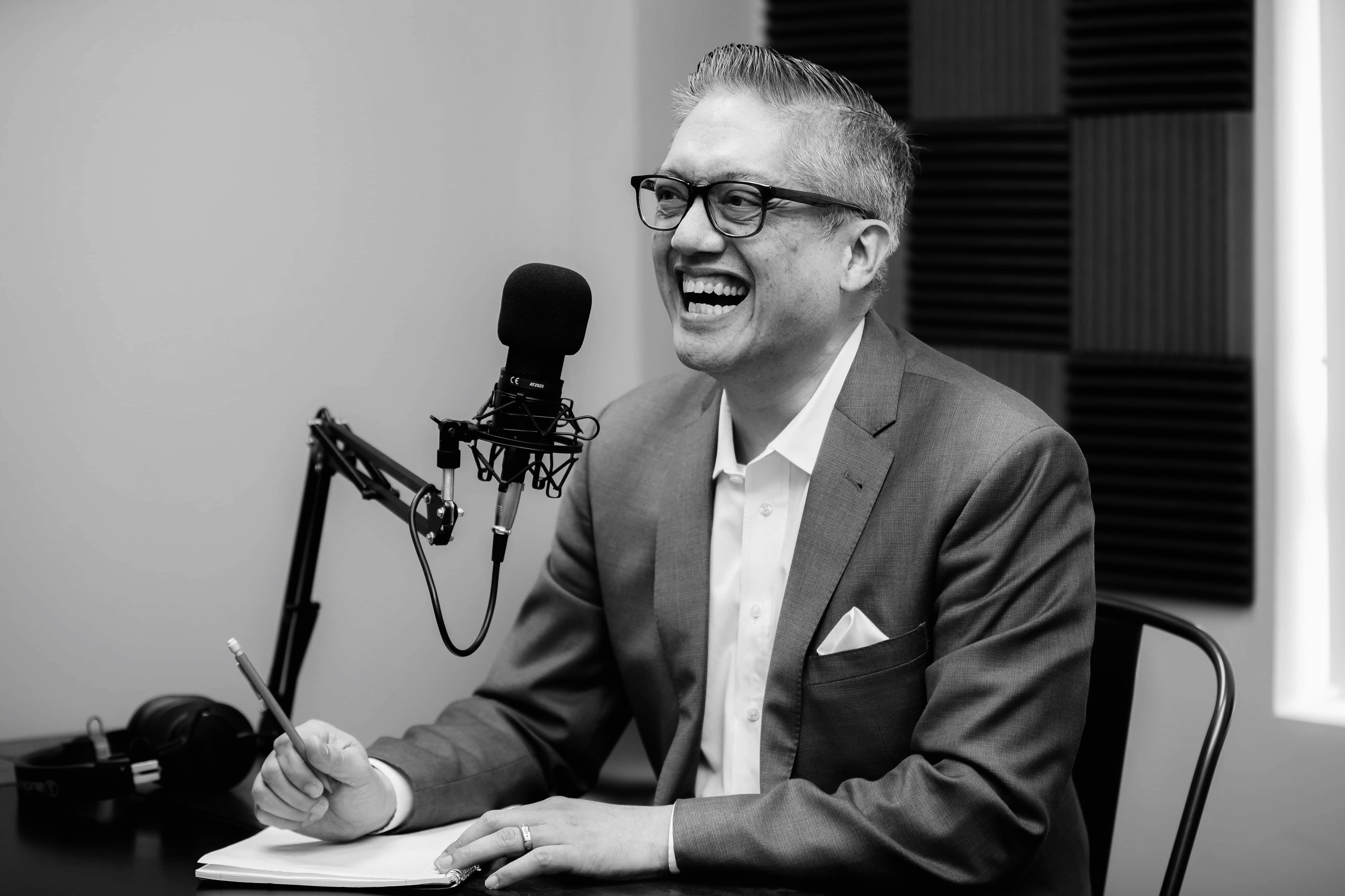
Debbie Bremer and Jodi Jefferson discuss Mental Health


 Apple Podcasts

 YouTube

 Spotify

 Overcast

 PocketCasts

 RSS Feed

 Amazon Music
Debbie Bremer and Jodi Jefferson are relentless servant leaders for their community. Dive onto this episode as they both share stories of vulnerbility!
The conversation focuses on the importance of mental health support and the personal stories behind the Christopher Bremer Foundation, highlighting the need for accessible resources and community involvement in mental health advocacy. The conversation highlights Jodi's inspiring journey of fundraising through baking, detailing her experiences from Air Force One to her community bake sales that support various charities, particularly the Christopher Bremer Foundation. It emphasizes the importance of community involvement, the impact of small acts of kindness, and the significance of raising awareness for mental health resources for veterans and their families.
Takeaways
- Mental health support is crucial
- Community involvement enhances accessibility Fundraising through baking
- Community impact and awareness
Chapters
- 00:00 The Power of Personal Stories
- 02:50 Understanding the Heart Behind the Foundation
- 06:13 The Importance of Community Support
- 08:46 Navigating Mental Health Challenges
- 12:07 Accessing Mental Health Resources
- 14:58 The Role of Licensed Counselors
- 17:47 Breaking Down Barriers to Counseling
- 21:00 Encouraging Conversations About Mental Health
- 23:57 The Future of Mental Health Advocacy
- 25:53 The Bake Sale Journey Begins
- 32:34 Impact of Fundraising on Community
- 36:18 Choosing the Right Cause
- 44:52 The Power of Community Engagement
BAKE SALE LINK
https://www.facebook.com/share/p/1C2nWC7fUM/
https://www.chrisbremerfoundation.org/
https://www.facebook.com/busybeebakingcompanyt
Host: Jay Miralles, The Connection
Jay Miralles: sometimes community looks like walking alongside someone. Sometimes it looks like baking some something with love. And sometimes it starts with the simple question: how are you really? Today I'm joined by two wonderful two amazing women, two leaders in their own space Debbie Bremer is representing the Christopher Bremer Foundation, and Jodi Jefferson, a good friend of mine as well, representing Busy B Baking Company and a board member of the 50 Mile March. We're gonna get to know Christopher through his mother's memories. Here, what brought these two women together. And talk about why making mental health support easier to reach matters so much. We also share how you can turn that conversation into action through an upcoming bake sale, which is going to be amazing. But first, I want to start with the heart and the why behind it all this. Debbie, before we talk about the foundation and the work that it does, I'd love for our listeners to get to know Christopher. What's a memory of your son that makes you smile and helps? us understand who he was. Christopher was always so outgoing. We moved a lot when he was young and we were in the restaurant business but my husband we moved a lot and he always like could go into a room and make friends so easily and I thought you know this kid can move anywhere and just make friends, be part of the group and just go with the flow. And I think that that was Christopher and he loved his family deeply and he cared about people and you know one thing that I always remember because of course being his mother is he would tell me honestly on a weekly basis, if I could pick any mother in the world, it would be you. I mean, he would always make me feel good about it, about being his mother and how much he loved me and he never was shy about it. So I I think that would be a great that was a great memory for thank you. Thank you for sharing that. I I know it takes a lot to share that. And Jodi, as you get to know Debbie and Christopher's story, what touched you personally and made you want to be part of the work that this amazing organization provides? I mean we all have our why with the 50 Mile March, and my why is my friend Amy, who took her own life while on active duty. very unexpectedly. We had no idea that she was struggling. and I also struggle ever since I retired. It's it's a tough transition to go from doing something for twenty one years and then all of a sudden it's over and it kind of leaves a void with you. And so I've had my own struggles. And so the work that the Christopher Bramer Foundation is doing is is incredibly important. And the need for mental health support, I think, It's larger now than it's ever been. I I can agree and what a way to open it up. Here's what I want to do. I want to lift the energy before we get into the heavy stuff. Okay. So this is what I call a rapid fire. So I'm gonna ask you eight questions and you can't think. You just have to either raise your hand yes or keep it down for no and don't think, right? And this should be fun. So here we go. We're gonna jump right into it. Have either of you Ever eaten a broken cookie? Because obviously you can't serve that to people. Okay. Have you ever volunteered? Right, right. Have you ever volunteered someone else who wasn't there to defend themselves? Have you ever said, I'm on the way while still deciding what to wear? yeah. I'm on my way, and you know okay. Have you ever hidden your favorite snacks from people you otherwise love very much? Have you ever bought something at a fundraiser that you donated in the first place? No, okay. Have you ever walked into a room with complete confidence and absolutely no idea why you're even there? I mean it's funny, right? It's like yes. And then you're like, why are you here? Have you ever said, let's keep it simple and somehow ended up with matching shirts and a planning committee? god. Let's keep this simple. Let's not overconfident 12 meetings later, right? Every day with you. It's getting hot in here. It's getting hot in here. Have you if someone says we need a volunteer, do you avoid eye contact even though we all know you're going to do it? No. No. Okay. Well good. Good. I'm glad we lighten the energy for a little bit. It tells a little bit, you know, and it I just don't want you to overthink. Now I want you to really relax as we go into the heart of the conversation, right? This is this is where we pour ourselves and allow people in a little bit of introspective into both your lives. Before we talk about the foundation again, about Christopher, what's a memory that makes you smile and capture who he was? gosh, probably him playing sports. Okay. You know, Chris loved playing sports, played baseball, played travel hockey for the junior lancers, and always, you know, would give it everything that he had. And On the outside, he didn't look very competitive. You would think he's pretty easygoing. But on the inside, yes, he was very competitive. Okay. So Okay. Well, that's that that there there's so many people and that you there's so many things you want people to remember about your son. And how does your foundation carry that part of him forward? How does your foundation, the Christopher Bremer Foundation, how do they carry his memories forward? I think that kindness and love and maybe you don't even know that individual but you're gonna make them part of whatever you're doing because they wanna be involved or they're there and you're gonna include them. I think Chris was really good at including everybody and not, you know, making them feel unwanted, that he always wanted everybody to feel included. I think that's important. And while we hear the name of Christopher Bremer Foundation, let's talk about the work behind it. Let's talk about the birth of the foundation, when it started and how it got to where it is today and how it serves people. Because we hear it too often, but we can't hear it enough of what important work that you do. Yeah, I guess getting the phone call that you know no one ever wants to get, that you had a friend, a loved one. And getting that phone call, and I was out of town and my phone ring like crazy, and then calling and you know, first, you know, talking with my daughter in law, and she's like, What is going on? I'm like, I don't know what is going on. What's going on with Chris? I don't know. What's going on with Chris? I don't know, you know, because I'm here out of town, and then calling, his girlfriend who he lived with for about three, four years. and I said, What's wrong? And she she was hysterically crying. And I said, What's wrong? Is Chris okay? And she said, No, he's not. And then after that happened and our world was shattered, my sisters and my family and I were all like, How did this happen? How did this happen? Why? And all the questions come racing at you. And we said, what can we do so that other others don't have to go through it? Which I think everybody when they think of their loved one, that it happened to them, they don't want anyone else to go through that. Right. Right. And so many of us do. Yes. And so how how can we how can we get involved and what can we do to make a difference so that those in need get the help that they deserve? I wanna go off on a tangent because I think this is important. When you're in a crisis like you were, all your friends and family and and and people who didn't know you, how can we help? How can we help? What's your advice on people who are offering help who really don't know what to do or what to say with your experience, right? Because we you I'm sure you do it too, Debbie, where some there's a crisis somewhere and you just want to help. What's the best thing someone can do? Or what's a what's one bit of advice you'd give to them? I I don't know. I guess you know, everybody can get involved in a different way. You know, it doesn't have to be you you if you don't have the money to give, you don't have to give. You can you can volunteer your time, you can reach out to a friend that you know maybe has been struggling. Yes. Or you just see a stranger on the street and you know, you can tell that they need to be lifted up in some sense of the word, and you say something that you mean. But that maybe lifts them up when they need it most. Yes. And there's no price tag. You can small access kindness like that. so now, can you tell us what the mission is? What what is the main mission that you want people to remember for the access of mental health? And what other ancillary programs do you have? Our main mission is being an advocate. Okay. And and connecting people. To resources that they need, and that removing those barriers to those resources so they can get them without insurance, without an appointment, without you know, understanding what's truly going on, they can walk in and get the help that they need. Jodi, when you hear that, you're a veteran, but this is for everyone. This is access for everyone. But Jodi, as a veteran, 20 plus years in our military. earlier you said you struggle. When it comes to mental health and access, what are some of the things you've experienced in the past in the past of trying to just gain access or hearing of people trying to get access? Yeah, I've gone through the VA and I think, I did see a therapist for a while and I you have to find someone that's compatible with you because not everyone is. Not saying that person is not a great therapist. Yes. But I think that's super important. So if you if you're struggling and then you're struggling to find a counselor that you that you jive with, that's just an even longer process. and so yeah, I think y there's just no time to wait. Yeah, if a person is in a bad space, they need that access right now. And to access the services for mental health counseling. No insurance. Can you talk about that, Debbie? Can you talk about how that idea even can because that's not inexpensive, right? It costs something. Right. Sure. It does cost something. And I feel like people have to know when they're struggling that, hey, we got you. You know what? You've got that, the link at Bellevue and the link at Bennington. They are in your back pocket. Yes. You know what? Keep them right there. Keep them real close. And when you need it. you if that's weekly, if that's monthly, yeah, or whatever that need may be, that's where we want to be there for you. And we know that when people are struggling, if they're also worried about paying for it, that is just an additional, well I can't do this. I mean our first person to walk in to our clinic said, you know what? I knew I needed to go get help. My brother took his life and I was struggling, but I couldn't add that mo barrier of having to pay for it onto my family too, because we I knew we couldn't afford for me to go there and pay for it. So this is something that, you know, I could go to and not have the guilt of, okay, now I'm just adding on and you're thinking about that instead of thinking about I have to get help and, you know, make it better. As humans we overcomplicate things anyway, right? Because The heaviness of the world, not performing at your best, self criticism, shame from others, right? In your head, right? Where where I want people to know there is no shame in in getting help. And Jodi, when when people say to you, you know, I'm thinking of, you know, going to the link, I'm thinking of going to Walk in Wednesdays, what what is your advice to those people as as a as another human being to another human being? What would you say to them? I would just encourage them. Absolutely. Try it out. what's the worst thing that can happen? Exactly. See, that's that's the adage is what's the worst that's gonna happen is you're gonna get better because it's the conversation, right? And I I don't get to know obviously every person that walks in because of the anonymity, but I do know of people who have walked in and because of those services have begun a pattern of their own to seek services. And and some of these people do have insurance already, they have health insurance. But sometimes it takes a community of people like you to nudge, right? Just a little bit or to remind intentionally. And I think people need to feel safe. You know, let's talk about that for a second. You know, I'm thinking of going to counseling, but what is are these licensed counselors? Like what? Describe that because not everybody knows it. What can I expect? Yes. Well what you can expect is for someone to be there that is very good at what they do and they are. They're a licensed counselor. Yes. And a lot of them are even licensed in the trauma area. Yes. And so they are there and most of them have been doing it a long time. Yeah. And they have a passion for what they're doing. Yes. And they're here to help. That's incredible. And they follow the same rules as every reporting agency if there's self harm immediate or danger to others. See, that's that's where this whole and we need to inform the public on what this is because I I I don't like the word free, right? But it is it is accessible and it is free to those who are taking it. But the word free encompasses so many things, it's paid for by your foundation. Right. It's paid for the dollars that you raise. Right. And and I think people sometimes forget that it's just some magical box that you walk into and you get some free counseling. Right. And it's just not an individual that's just, you know, that just said, Hey, I'll do this, I'll listen to people. No, these are licensed counselors and they have to do everything that a normal counselor has to do, all the reporting and everything like that. They have have their action plans. They have to have all of that and they keep all of that. You know, and they're all licensed, they're all insured. The foundation itself has an extra insurance policy. Yes. Over both locations. I just want people to know that. Yes. You know, that we make sure that everybody's covered and then we have an additional policy so that we can feel good about what's going on too. So because the world of mental health is It is definitely a journey, and there's many moving pieces. What's incredible to me is someone out from looking at the outside. I just remember hearing about this from when you started to speak with our foundation. And I thought to myself, what other places? Okay, we talk about access, and there's a mental health counselor, there's psychiatrist, psychologist, there's a VA, there's this program, there's that program. Accessibility and the low friction of entry alone. People to access this every Wednesday in in Bellevue at least. And Bennington. Yes, both. No appointment. You don't have to call. We don't have to know you're coming. Yeah. You can just come. I know. There's and there's something to be said about that because you stand at the ready regardless if people come or not. You know, but I would encourage people to truly take this as a first step. And Because we're so hesitant. And all it is really is talking to somebody and let's not wait until it's too late. Let's let's take advantage of the resources to work through a a job issue. Let's work it through. I need advice on how to parent, maybe, or I need advice on myself. Hey, I'm experiencing this. Or I just want to vent. There are some people, a lot of people, who don't get to talk on a daily basis to adult. Other adults, right? So when they get home, it's all pent up and and sometimes they just dump on their partner. Right. It would be good for them to speak to a therapist and see which way to vent, all the feelings out. And I I just think it's an incredible resource. I think it's relevant right now that we have something like this in our community. And I don't want people to take that for granted. And so Can I say something? Absolutely. I think too it's a free resource and we talked about peop those that have insurance. Maybe someone's never been to counseling, but they've they're having issues. Go here. Just go walk in, try it out. Maybe it is something for you. And maybe, you know, maybe you're open to different counselors and you do have insurance. So maybe you're like, Okay, that felt really good. Maybe I this is something I should do more often. And then maybe those counselors there can help them. use their insurance and then work it through that. Yes. And then that leaves that space open for somebody else that maybe can't afford it. But this is a perfect like trial run to maybe see if it's something that's for them and that they absolutely find out that they do need. Because I think we all need that outlet of just talking to someone because like you said, you know, I work by myself all day long. Yes. And so And it's up to cookies. That's why like Rocky Cookies It's so helpful for me because it gives me an opportunity to just get out and talk to people that, you know, are like minded. And then sometimes my customers come pick up and I get really chatty with them and they're I'm just scared to get my work. I really gotta get my talk to my ears, you know? And so I think we all just need, you know, now that so many people work remotely or they work from home or we just life is different. Yes. Yes. And it it makes a really big difference. Isolation is so abundant amongst our society now. It's okay to insulate yourself. Give yourself a break. Okay. You're not gonna go out with all your friends maybe this week, maybe you miss a dinner party. But there are some people who do nothing but stress themselves all day and then they go home, they ignore their phones and and and and their self-talk amplifies. I think talking with somebody. even a licensed stranger, right, is so good because they may be the only people to listen to you that day. Right. That month. That year. and we we think of counseling as some kind of so it's such a difficult, you know, kind of tango. It's really not. No. It's a conversation. It's not lights on top of you, you know, with with interrogation. It's yes. Tell me where it hurts. Yeah. And so I I think we we need to remember that. I never get to say this out loud. I'm glad that we're in this concentrated setting. And I know, Debbie, there's someone out there right now, watching us right now. And Jodi, they're they're they're watching what you're saying. What do you want them to feel? Like, what do you want them to feel from this conversation? They're they're hurting right now. They're listening. What do you want to say to that person? Just go. They matter. Yeah. Yeah. They matter. And you know, I think that that is a hundred percent like when something does happen, it's it just is crazy how the ripple effect is. Like you think, you know, how many lives your life's touch is amazing and that you matter and you know you can get through it. And everybody has highs and lows in life. Everybody does. and it's important to know that, you know what, we're along for the ride and everybody can utilize this service. Everybody can. Everyone. It doesn't matter how much you're hurting or how great you know you're feeling because counseling is for everybody. It is. And I want people to remember that counseling is for everybody. It's just a way of life. It really is. Yeah. I want to say that I personally know someone, a friend who went through this counseling and Without getting too heavy, they've benefited so much from it. And when you partnered with the Fifty Mile March Foundation, we didn't obviously know what this would look like and everyone was entering a relationship, but thank God you did. Thank God you did. You know what? Early on when we were talking and you know, just seeing, hey, would this be a good fit? I mean I was telling everyone, my the board, everybody, I'm like, this is gonna be so wonderful because it's vet focused and you know what? There's just such a need, and I'm not saying there's just a need in that arena, of course, everyone, but I just felt so good about it. Like we can offer this to people and they can just walk in with no judgment. know anything and get services that they need. And I I really felt so good about it. And it's been a wonderful partnership. And I know that we're just getting started. I love that. We are. We just are. We're like just getting started. It's just the tip of the iceberg really. It's like, and I know there's a lot more to come. Yes. And and we're learning. And you know, I I think of the work of the Fifty Mile March Foundation and how such a a great ally you are and a resource and a partner. Because mental health challenges is one of the things we hit head on. And we are not counselors. We are not licensed counselors. And how expensive would it be right now for us to have hired a counselor? Your organization, your partnership is valuable, even just for the one life that I'm talking about. Just for the one. And but there are many stories. Many stories stories that we'll never hear about. People will never see. but I know. That walk in Wednesdays are so valuable. all right, let's if we can come back to that later, I do want to talk about this. So, Jodi, tell there's many people that know about your fundraiser, but I want to tell the story of how this fundraising. So my friend Jodi, Air Force One, I just told him like I'm sorry, I don't even know. I almost want to put on the sale and you're like, Did you know she flew with three presidents? Yeah, three, right? Two. Sorry, you're not that old. Two presidents. Yeah, it's it's amazing. It's badass, right? Like this is my friend. And but you know, too too often, you know, w it doesn't get mentioned, right? But and she doesn't mention it. I'm the one that's always like, you know, she flew on Air Force One. But Jodi, talk about your baking, you know, your love of baking, how it started and then how this crazy fundraising journey started for you and and then I'm gonna ask you for some stats because I don't have them all written down and if I say them I know you're gonna correct me. So you might as well do them yourself. We're not friends. We're not friends. So this bake sale actually started when I was flying in Air Force One. Yes. can you give people the year ish, the year of gosh. Probably twenty Two thousand nine, maybe. it's been a it's been a while. so I worked in our hangar at Air Force One. We had two squadrons within our group, the maintenance and then the ops. And so we had about 400, 450 people in our in our group, in our hangar. Yeah. And so I would put out a menu and I would bake there in our presidential kitchen. And it was just within the hangar, people would order. in right before Thanksgiving. So every year we'd raise a couple thousand dollars and I would just turn the money into the front office and I would say, you know, use this to offset the cost of the NCO's Christmas party tickets or what use it or whatever. Yeah. So the first two or three years I did that. And then the following year I thought, you know, we're making a significant amount of money. We should probably, you know, do something a little bit better with it. And so that year I asked the commander if we could there was tons of wounded warriors at Bethesda recovering from their injuries. And so I said, Could we take the money that we raise and go purchase I mean, this is dating myself, magazines, CDs, I I mean iPads, just What are CDs? iPads, gift cards, books, you know, things that could help occupy their time while they were recovering. And so he was like, Yeah, I think that's a fantastic idea. And so That year we I think we raised, I don't know, twenty five hundred or three thousand dollars. It wasn't t a ton of money, but we were able to go to the BX and we purchased a bunch of stuff and then we coordinated with Walter Reed to go and just kind of be elves around Christmas time and and give those guys some some free things. And I have lots of pictures from our from our trip that day and Amy was actually there. And so it's even more special because she's in a lot of those pictures and So then fast forward several years, I I quit flying on Air Force One because I was pregnant with the twins and then I got stationed here at Offit. The twins were young, David was in Korea, so I was just just trying to make it through each day. keeping everyone alive. Yeah. And I mean, right? Almost like not single mom in it, but dad was deployed. Yeah. Husband was deployed. And you're raising these kids. Yeah. Right? And so my mom had basically moved here from company. Yeah. And my dad would come on the weekends and help and I was flying alert all the time. And so yeah, we were just my mom's cancer. It was a lot. Yeah. But we made it through. My mom's still with Mama Jerry. Yes, yes, yes. Mama Jerry. So then off press school too. Mom and I were at church. This was this had to been in twenty eighteen, because we're in our eighth year here. mom and I were at church and the church was look they had a par teen parent ministry sort of thing that they weren't needing to purchase a vehicle. Yes. in order for these teens to be able to get to their medical appointments and their parenting appointments and such. And so after church, mom was like, do you think we could raise a little money to help with that? And I was like, yeah, well it's brainstorm. Yeah. And so we were actually in Grand Island at my 20th high school reunion. Sh her and I had drove out there so I could meet up with my friends from high school. And we were sitting waiting for a group to get there and she says, let's talk about how we could raise some money. She goes, You know, you used to that do that bake sale at Air Force One. What do you think about that? And I was like, Yeah, like let's try it a try. Right. And so we put out a small menu. And this was before I I was still active duty at the time. So this was before I had started Busy B. And so that year we raised like twenty five hundred dollars. So we just handed it off to the church and we were like, good job, mom. High five. Yeah, yeah. And then the next year came and I think a few c you know people had asked, Are you gonna do that again? Cause we really enjoyed our hire or whatever, you know, we had baked and so I'm like, Mom, what do you think? Should we do it again? And she's like, Well sure, why not? And so that year we chose the rainbow house because we have some family friends that live in Lexington and they have a son that has downs and they would often have to travel to children for his appointments and they would get put up in the Rainbow House. And they just talked hi so highly of it and what a great resource it was for them and their family. And so that year we raised six thousand dollars. And yeah, so each year we've just picked a different nonprofit or charity in the Omaha area that aligns with our family's values. Yes. And the whole thing has really turned into a family affair. and a couple friends sometimes. Yeah, yeah, we got some volunteers now. Bless their hearts. They only mess up a few things. Yeah, yeah, yeah, yeah. But but okay, I this is intense though. Okay, so let's let me ask one question first. In total, just from these bake sales, I know we kind of put this together once. What's the total from bake sale one to last year's bake sale? We're over $75,000. That's Incredible. I mean, I want people to understand something though. Do you know, like, okay, when people sell things, they're saying, okay, 10% of proceeds. No, this is 100% of proceeds, and you're losing not losing, but your your cost of goods are being basically your donation, but you're force multiplying. So instead of three dollars, it becomes 10. And and which I I think people need to remember that is it's not a portion of proceeds, it's all the proceeds. Yeah. So I I want people to look at it like you're making a thirty dollar donation and you're getting a pie. Yes. You know You are making a donation to the Christopher Bramer Foundation and you the bonus is the pie. Yeah. When people tell me sometimes, you know, because they have, I can get it, cheap bread, so and so I say, Well, you sure can. But it doesn't taste like it does. Yeah. But what I do want people to remember is it's your time. I want them to know how stressful the oven situation is. Those okay, so Debbie, have you ever heard of this where the ovens stay on for 24 hours and then 23. 23. Okay. It's like a it's just something. Yes, nothing is superstitious. It is. yeah, we'll we'll turn the ovens off for like one hour to give them a little break over a five day period. So every twenty every twenty three hours. And she doesn't sleep that whole time. It's I can't even imagine. It's well we take little cat nap. Okay, but yeah, but still can you imagine going five. I can't imagine baking one pie. Okay, one. I can mess that up. I can mess that up. I have. That's why I don't buy a spine buy from you. But I think that's mighty generous. And I think that's incredible. But what's more incredible is, you know, the reason that you go out and you are very careful and very selective now of people that you are looking to donate to or support. And and I want to reinforce this. Can you tell me about your journey in selecting the Christopher Bremer Foundation? What what led you there? And how did you think about it? And we don't need to talk about the others, but just you had others in consideration. Right? How did you walk through this and how did you choose Christopher Bremer Foundation? Yeah, every year around July August timeframe is when I really start thinking, okay, it like it's about time I gotta s make my selection and then we gotta start advertising because we start advertising usually the first or second week of September. Yes. for the bake sale. And several years ago I chose a fifty mile marks. That was the year before I joined participated. Yes. Right. Because I had missed the cutoff. And just the work that we're doing for veterans, obviously it's super meaningful to me. Yeah. And then to just throw in the mental health piece, like I just want to see, you know this resource continue to be available for these veterans, these, you know, the spouses of veterans. Yes. I I read a Facebook post today where there's a spouse that is literally at her wits' end. She's worried. Obviously her husband is deployed in a very dangerous place and she's worried about him and she just you know, and so obviously I right away I, you know, tagged Christopher Bramer, said Please go tomorrow. And so yeah, just the work that you're doing, it's it's so incredibly important. And and there's so many nonprofits in the Homa Omaha area. If I could help every one of them, I would you would, but but truly concentrating your effort, aligning it with your soul, with what you believe in, there's no doubt, right? It was almost like duh. It wasn't duh, but you know what I mean? It was like this is it. Yeah. And you know where the money's going. You see where the impact of services are. And and I think I I remember when Jodi called me, not that she needed my advice, but you know what I mean. I I was like, no-brainer, you know. she's her own person, of course, but I just look at all the great work that you do, Debbie, and all the things we never hear about. And I want you to know that we're thankful for those too. You know, that this the great stories are great, but the things that we never hear about, we'll never see. But we just trust because for the little good that you see, you know there's way more good going on. We're grateful to be part of the fifty mile march too. So that was a no brainer for us. We've you know, we're and we feel the same way. And we get that a lot when I tell people, Well, we partnered with them. wow, what a wonderful organization. You know, and that doesn't that just fill your heart? Yes. You know when you hear that. And it's and it's so true. And yes, and you know, everyone can be rest assured, you know. all everything that people donate, everything, every bit of it goes to paying for the counselors for our locations. And we have to have one, two, three more, you know. Yes, and we want to be there. We want to be there to fuel that. Yeah. So that's what's next is the expansion of even more accessibility. First of all, Bennington and Bellevue are just two great places. Period. End of story. If that's all there ever was, yeah. That's enough. Right. Right. Right? Right. But you're talking about, you know, future services and I like that. But Future services require support. We just want the community to rally around. And sometimes we talk about time, talent, and treasure. what are some of the ways, Debbie, that people can get involved in your organization? I know that you have golf tournament, which was we were there. Yeah, one of the best ever. Because it was like a high school reunion for me. I recognized a lot of people, you know, that I've never seen for years. Yes. And there and first of all, for you to invite another my gosh, yes. So because we're both on the same page. Yes. You know, so that's easy. And you know, we sometimes will invite Nammy or whatever. Yes. Because there's like you said, there's so many great nonprofits. There really is. There's so many. But yeah, but you were just trying to recruit walkers, not solicit donations. Yeah, no, donate to Christmas. But walk with us, you know, because it's it's on it's it's not common for people to a line like that because we are there are so many good nonprofits in omen and and to be unselfish like that and share that space with your great audience people signed up that day because you know they said we're we're gonna I said I don't know if you know what you're getting it's you know it's gonna be fun. Yeah my my sister like I think I might do it. I said, well let me tell you just a little bit of Just a little bit. I'm not trying to discourage you. Yes, with your sister's number. Yeah, I know. And then I told her, Well, okay, I might just look from the outside for a little bit and check it out. I said, Okay. You know, I said I get it. I get it. So conversations. A lot of the goal things. Let's give this community something to, you know, concrete to rally around. Yes. Last year's fundraiser, you don't need to tell me who it was. What did you raise last year? Because every year it grows. What was down a little bit. Okay, that's okay. and like you said, people can get things dollars have to stretch a little further these days. And we understand that. Yes. and so we were down a little bit last year. but we have not raised our prices in several years for you know however our costs, like you said, we front the cost for the thousands of eggs that we go through. Yes, thank god. The hundreds of pounds of butter and sugar and so about three years ago, price on eggs, I mean we were paying I was shopping all over town for eggs. They were thirty three cents a piece and we're talking fifteen hundred to two thousand eggs that we go through. So now don't show up everybody with thousands of eggs, right? Like we can't just do that and just be like, here's the eggs. You know, but talk about the the goal this year. Do you have a goal? Do you ever set a goal and say, hey, this many pies or that much money? Because I know you're competitive. Yeah, do you know we like to set ambitious goals. Yes, I do. I do. And then and then let's talk about telling people how we can get there, right? A goal's a goal, but tell people how we can get there and then ultimately how it impacts the Christopher Bremer Foundation. Yeah, so I think my goal last year was I would have loved to have hit twenty thousand. We were we were shy of that, which was fine. Yes. anything raised is more than had it had it not done. Yes. Correct. Correct. And so this year and it's always slow. I mean we're what, four weeks out from Thanksgiving? I just know I just know. I'll let people know where we are. So we're probably twenty five hundred to three thousand right now. Okay, okay, okay. It's early on. Which is pretty early, yeah. And people are just now starting to think about, who's hosting, who's bringing what, And we have some people every year they they religiously get, you know, the bread pudding and it has now become a family tradition. Like so and so is going to bring the bread pudding from Busy B and we love that. There was almost an altercation at a house a couple of years ago because the pecam praline sauce was thrown out got mistaken for the gravy and it got thrown away. And now the bread pudding was no good without the pecam praline sauce. So we love those stories. we love the people that come back year after year. one of my our great family friends, she recently passed away and every year she would order a bread pudding. And so as soon as I heard of her passing, it was like, No bread pudding for for Lowe instead of here. But just those little memories that I have. You know, she was just getting a little bit older, but she just religiously would order one every year for their family Thanksgiving. And so another fun thing is this is a family affair for us. Yes. my dad we take orders for Hampton, Aurora, yes, New York, Lincoln, and so Every year th thankfully the weather has held out. We haven't had a major snowstorm that has prevented my dad. But he'll load up his truck on Wednesday morning with all the baked goods that go back to Hampton and he's got the Santa Claus beard too. And he just loves going back 'cause he you know, he's has everyone's phone number. We do an inventory and make sure he has all the right items and we send him on his way and he'll text or call people when he gets to town or when he's getting close. And then as our kids have grown, on pickup day, the Wednesday before Thanksgiving or the Wednesday, the day before Thanksgiving, but pickup day is my favorite day of the year. So all the baking is done. Everybody comes here. So your neighbors are probably like, my gosh, yeah, it's like a revolving door. So we have pickup from eight AM to eight PM because we have people, you know, that wanna hit the road first thing in the morning. And then we have people that work all day that day. Right. And so they They have to pick up after they get off work. And so we set up a check-in desk and it's very efficient. We have handwritten thank you cards. Yes, for every person that picks up, which is first of all, the pies are enough. Yeah. But to handwrite a note, that is Yeah, my mom handwrites a thank you card. and then on the back, we write their order, what they owe, and then we send that out to the garage with the kids. And the kids are at the age now where they can get everyone's order. They bring it we collect their payment and then the kids help them to their car. So that's so cool. It's literally a a a whole family affair and we're just, you know, thankful to do it. We're so grateful that we can give back to the community. Yeah. But we're also teaching our kids what it means to give back and to be helpful. Yeah, we talk about don't tell them, show them. Right. That's what we say at the Fifty Mile March Foundation. I think everywhere, but We want to encourage our children, right? And and we always talk about, how this generation is this and that. You know what? It's because you're not showing them enough. Right. You gotta show enough. You gotta you gotta help them along and help them to see the bigger picture because sometimes it is on a screen. We've gotta take that screen away and show them like, hey, there's other things other than the screen. I just know your Christopher Bremer Foundation community of people. that that's where the mobilization and I've seen you already promote. We're gonna heavily promote, I'm gonna heavily promote. This podcast is gonna get more than seven downloads, I know. Yeah, but this is the energy, right? This is where it starts. Yes. It's pure. And you know, I just I love bringing people together. This is my this is my joy of connecting people. Did you two even know each other before any of this? No. I think I met you maybe at the mission brief, right? Yeah. See? My grand was parked next to you and I was trying to back out. Yeah. You're you're like I was like, there's you might have to move because I can't get this. I did a 17-point tournament still wasn't half the eight. I was I look over and she's like on her phone or something, I was like, I'm just making great. And of course you guys are. Yeah, that that is funny. But you know, I It's it's it's it's these moments that were brought together and and reminds us how important the work that we all do together is better when we are together. Because alone it is it is lonely, it is difficult, and and again that inner voice in your head, and I keep talking about that inner voice in your head, it it's not good for you. You know, and and then when you get encouragement and I just knew I wanted to be there. I think you guys met at Stories or what did you guys meet? Yeah, yeah. See that I knew she was too I was like, man, I wish I could be there. I just want to see everyone's faces. Yeah. You know, and that's my joy is connecting and getting out of the way. I wanna ask this, you know, just any last Debbie, you do so much for the community and and and and the Christopher Bremer Foundation. Is there any wish that you have, you know, that that might that you want to express that might make life better for other people? You know, because we live in a world that you hear all the bad news. I want this to end on good news. Gosh, you know, I think I hear so many times, like when we talk about, you know, the Chris Bremer Foundation or somebody that's going through something and I tell them about the Chris Bremer Foundation and and maybe they never heard of it. Right. You know, and I'm like, my God, how can we spread a message like this and get everyone to know about it and utilize the services? Because that that really is my desire is that everyone knows about it and understands it and knows where we're coming from with it. And I feel like there's so many people that don't even know about it yet. Yes. And I wish that we could just get that message out there for everyone that needs it. Because when people do go and they utilize the services or they take someone there or they send someone or tell someone about it. And then we get the benefit of hearing the story about it afterwards or someone calls you and tells you what a difference you've made. Yes. The power in that is just overwhelming. You know, yes. And it's like, I just want everyone to know about it and you know, and be able to do good. And that's what's important to me and my family. And as all of you know, it you know, there's so many people at the foundation that do so many things behind the scenes and none of it could happen without all of them. And here's Chewie joining us. And and Jodi, as we end, we talk about y just your positive message are like we we want people to know so they can access. Jodi, what's something you want to depart, because it is easy to get weighed down on. What's something you wanna tell people? here's the good in the world that we need to remember, here's the good in the programs in which they offer whatever, remind people how good life can be. Yeah, so I think you talked about time, talent, and treasure. Well, first, like Debbie's saying, we just want people to know about this. You might not need it now or you might not know of anybody that needs it now, but put it in your pocket. Yes. Yes. As a tool in your toolbox. because there's gonna come a day. where someone's struggling, whether it's a friend or a family or a stranger. Yes. And you can just share that with them or take them. but again, we talk about time, talent, and treasure. I feel like I'm just the I don't even know what word to use. I'm just the middle guy in this whole thing. The conduit. Yeah. Yes. The ambassador of good. Yeah. And I obviously I love to bake. I love to serve people. and so this is just a way my my clients obviously are the ones placing the orders. Yes. All of our customers. And then so so I don't feel like I should be taking the credit for for any of the money that's raised. It's the community, it's the clients. Well, you know, I'm just kind of the middle the pass her through or whatever. I I can appreciate that, but you need to give yourself some credit It's just an honor to be a part of, you know, these different organizations that we've raised for in the in the past seven years. And we just love doing it. It's what you're well known for. Yeah. And and so I'll I'll conclude with this. You know, I hope today's conversation made you think of someone and beyond asking how they're doing, serve them, be with them. And I want you to remember during this bake sale, yeah, you might buy a $30 pie, but that's a that's a donation and that's going to be passed straight through to the Christopher Bremer Foundation. And that is going to impact someone's life. So while this whole circle of life is, everyone has their part, but the most important part begins with you. It begins with what is it that you need and who is it that you can serve. with that being said, my name is Jay Morales, and I thank two of my guests today for being here, Jodi and Debbie. And I want all you to have a blessed day.